


As Lauren Edwards MP has announced that she will bring back the Assisted Dying Bill, an enormous amount of misinformation is present on what the Bill is, what happened to it in the House of Lords, and how the Parliament Act works. Nathan Stilwell, our lead on assisted dying, has produced this guide to the Parliament Act and the Terminally Ill Adults (End of Life) Bill.
In summary, using the Parliament Act to allow the Assisted Dying Bill to pass is correcting an injustice committed by a small number of Members of the House of Lords, who blocked the Bill through procedural gameplaying. The Parliament Act makes sure that elected politicians have the final say over the unelected House of Lords.
What is the Parliament Act?
The Parliament Act is actually two laws together, one from 1911 and 1949, that restrict the House of Lords from overruling the House of Commons.
Normally, a Bill has to be approved by both the House of Commons and the House of Lords before it can become law. But the Parliament Acts mean that, in some circumstances, the elected House of Commons can have the final say. If MPs pass the same Bill again in the next parliamentary session, and the Lords still refuse to pass it, the Bill can become law without the Lords’ approval.
Has the Parliament Act been used before on similar issues to assisted dying?
Yes. There is a clear precedent of the Parliament Act being used on a ‘conscience issue’ for something similar to the Terminally Ill Adults Bill:
- In 1991, the War Crimes Act allowed UK courts to prosecute serious Second World War crimes committed in Nazi-occupied Europe. The Lords blocked it, so the Commons used the Parliament Acts to pass it.
- In 2000, the Sexual Offences (Amendment) Act, best known for equalising the age of consent, was repeatedly resisted by the Lords despite Commons support on a free vote. It became law via the Parliament Act.
- In 2004, the Hunting Act, banning hunting with dogs, followed the same pattern: after Lords’ resistance and prolonged deadlock, the Commons used the Parliament Acts to enact it.
There have been cases where the House of Commons voted for a Bill, the Lords rejected it, the Commons brought it back, and then the Lords backed down and let it pass.
Does the Parliament Act apply to Private Members’ Bills?
The Assisted Dying Bill is a Private Members’ Bill (PMB), meaning it’s proposed by an individual politician rather than the Government. Initially, the Bill was proposed by Kim Leadbeater MP and failed in the House of Lords. A new Bill has been proposed by Lauren Edwards MP.
Yes, the Parliament Act very, very clearly applies to Private Members’ Bills.
An attempt in 1911 to restrict it was firmly rejected by the House of Commons. In other words, elected politicians clearly voted for the Parliament Act to apply.
The 2019 guide to the Parliament Act for government drafters clearly states that it does, as does the House of Lords Library, and the Hansard Society guide.
What is the Terminally Ill Adults (End of Life) Bill?
The Terminally Ill Adults (End of Life) Bill would legalise assisted dying. Under the Bill, to be eligible for an assisted death, a person must be:
- 18 years old
- A UK resident
- Dying from a terminal illness that will end their life in six months or less
- Have full mental capacity and ‘a clear, settled and informed wish to end their own life’.
In order to access an assisted death, the person must:
- Make a witnessed, written declaration
- Have an assessment by a doctor with specific training
- Wait seven days
- Have a second assessment by an independent doctor with training
- Wait fourteen days
- Be approved by a panel consisting of a lawyer, psychiatrist and social worker
- If approved, one of the assessing doctors must provide the medication and stay with the patient until they die. The patient must take the medication themselves.
At every interaction with a panel or medical professional, the patient is being tested for capacity and coercion. All doctors and panel members must have training in domestic abuse, including coercive control and financial abuse.
A person who, by dishonesty, coercion or pressure, induces another person to have an assisted death would face lifetime imprisonment.
Compare that tightly safeguarded system with the status quo, where terminally ill people can still end their lives, but often in more traumatic, lonely, and unsafe ways, without the oversight, protections, and accountability this Bill would provide.

What happened to the Terminally Ill Adults (End of Life) Bill?
In June 2025, after 100+ hours of debate, the Bill passed the House of Commons by 314 votes to 291. It then went to the House of Lords to be discussed in further detail and for more changes to be made.
But in the House of Lords, nearly 1,300 changes to the Bill were proposed, a record for any parliamentary Bill. Amendments have included a pregnancy test for all applicants, including men, a one-year holiday ban for applicants, and an unworkable requirement for half a dozen GP visits.
The debate continued at a glacial pace; for example, peers spent nearly an hour debating a group of probing amendments from Lord Frost that would change the wording of ‘assistance to end their own life’ in the Bill to ‘medical help to commit suicide by provision of lethal drugs’. These amendments add nothing to the clarity, workability or safety of the Bill and replace neutral, clinically accurate language with stigmatising terminology.

In April 2026, the Bill failed in the House of Lords. 43 UK citizens have died at the Swiss assisted dying centre Dignitas since the first reading of the Assisted Dying Bill in the House of Lords on 23 June 2025.
We have identified several instances of peers being explicitly clear that they were trying to block the Bill by means other than it being voted down.
What happens next?
Despite reports that the Bill will be ‘rammed through’ or ‘avoid scrutiny’, the new Bill will go through every single step it did the first time. Our elected representatives will debate and vote on the Bill multiple times.
If MPs pass the new Bill, it will go to the House of Lords again. Hopefully, this second time around, the Bill will not be subjected to the same filibuster again, and peers will look at it seriously and consider and vote on amendments.
If the House of Lords makes amendments that are sensible, it will then go back to the House of Commons, which may vote to agree with those changes. If that happens and both Houses agree, the Bill will pass without the Parliament Act.
The Parliament Act will only take effect if the House of Lords ‘rejects’ the legislation a second time. That could mean they filibuster the Bill again, or they reject it outright on a vote, or they propose amendments that the House of Commons deems unacceptable, and the Lords and the Commons remain deadlocked.
The key point is: If the Bill passes the House of Commons and is nearly identical to the previous Bill, the Lords can’t block it.
Nathan Stilwell, spokesperson for Humanists UK, said:
‘It still feels unbelievable that a small group of peers in the unelected House of Lords filibustered the Assisted Dying Bill. Bringing back the Bill corrects this injustice and allows our democratically elected politicians the final say on legislation.
‘Terminally ill people were given a ray of hope last June when the House of Commons passed the Bill. Assisted dying means that dying people and their families can be together and enjoy the final months of life, without worrying about the pain and suffering death may bring. Everyone should be in control of their own bodies, and everyone deserves compassion.’
Notes
Further reading on the Parliament Act:
- 2019 guide to the Parliament Act for government drafters
- House of Lords Library – Private Members’ Bills and the Parliament Act
- Hansard Society guide to the Parliament Act
For further comment or information, media should contact Humanists UK Head of Press and Campaign Communications Nathan Stilwell at press@humanists.uk or phone 0203 675 0959 (media only).
Humanists UK is making the following photos available to the media to use – credit to Simona Sermont/Humanists UK – 1, 2, 3, 4, 5.
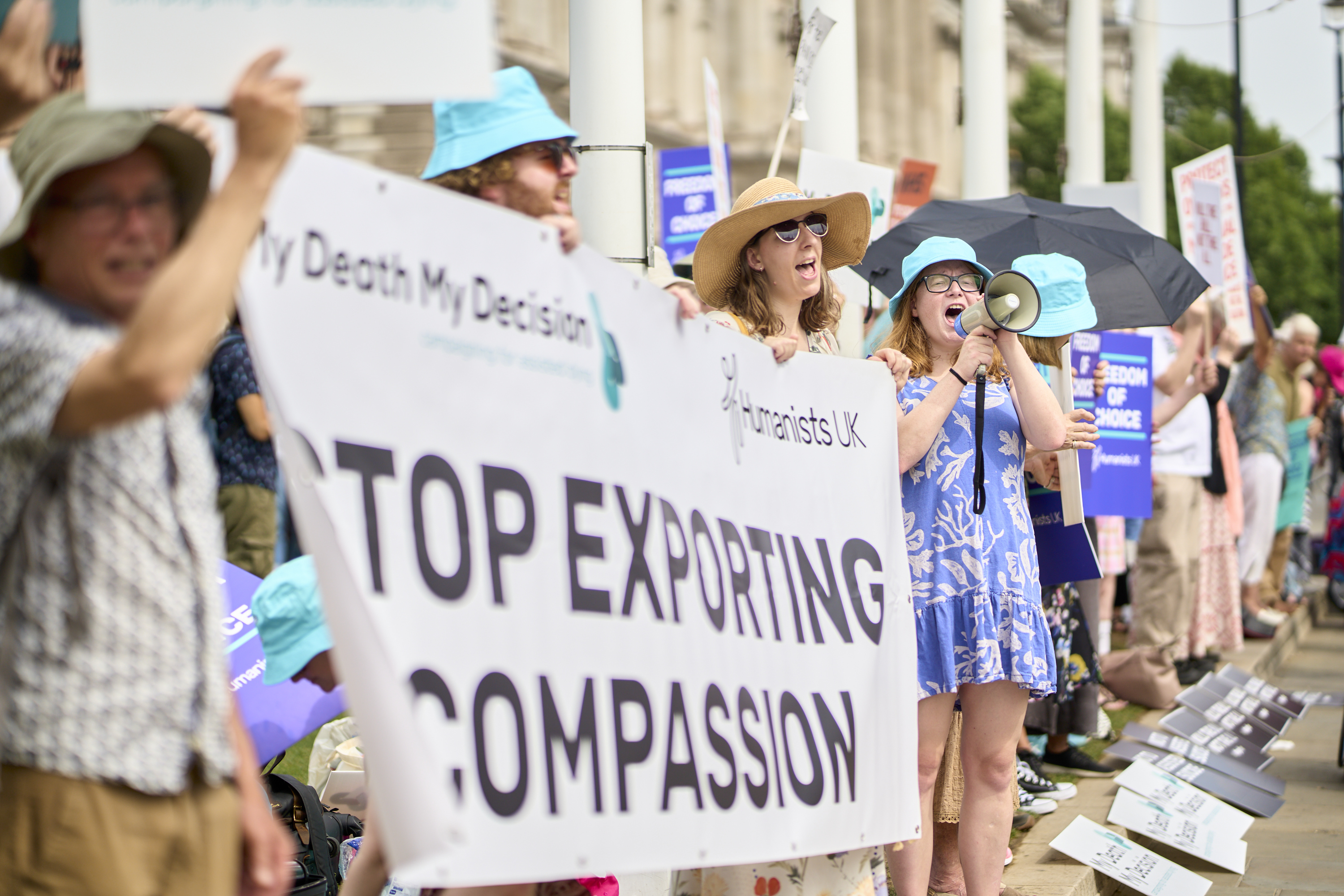
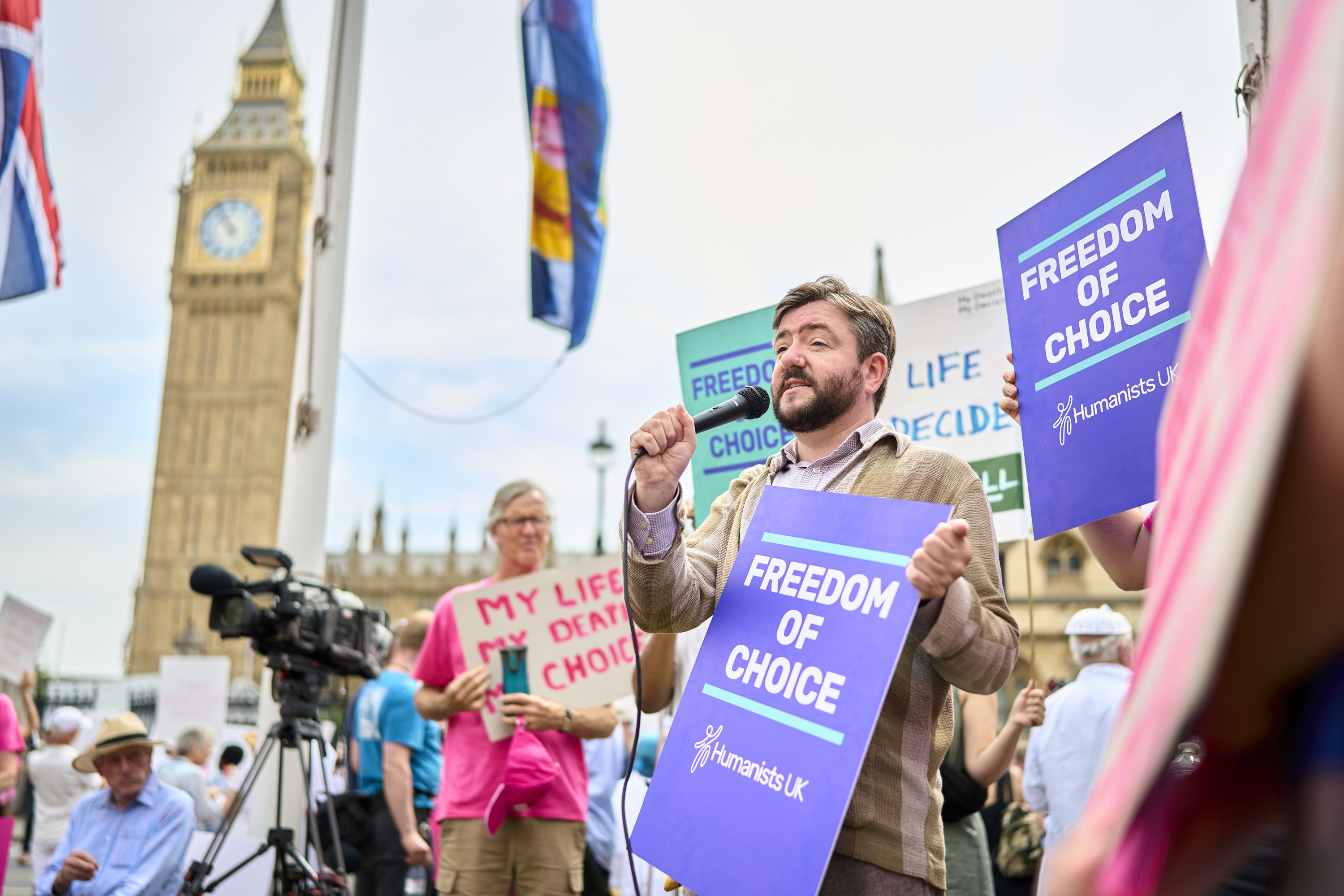
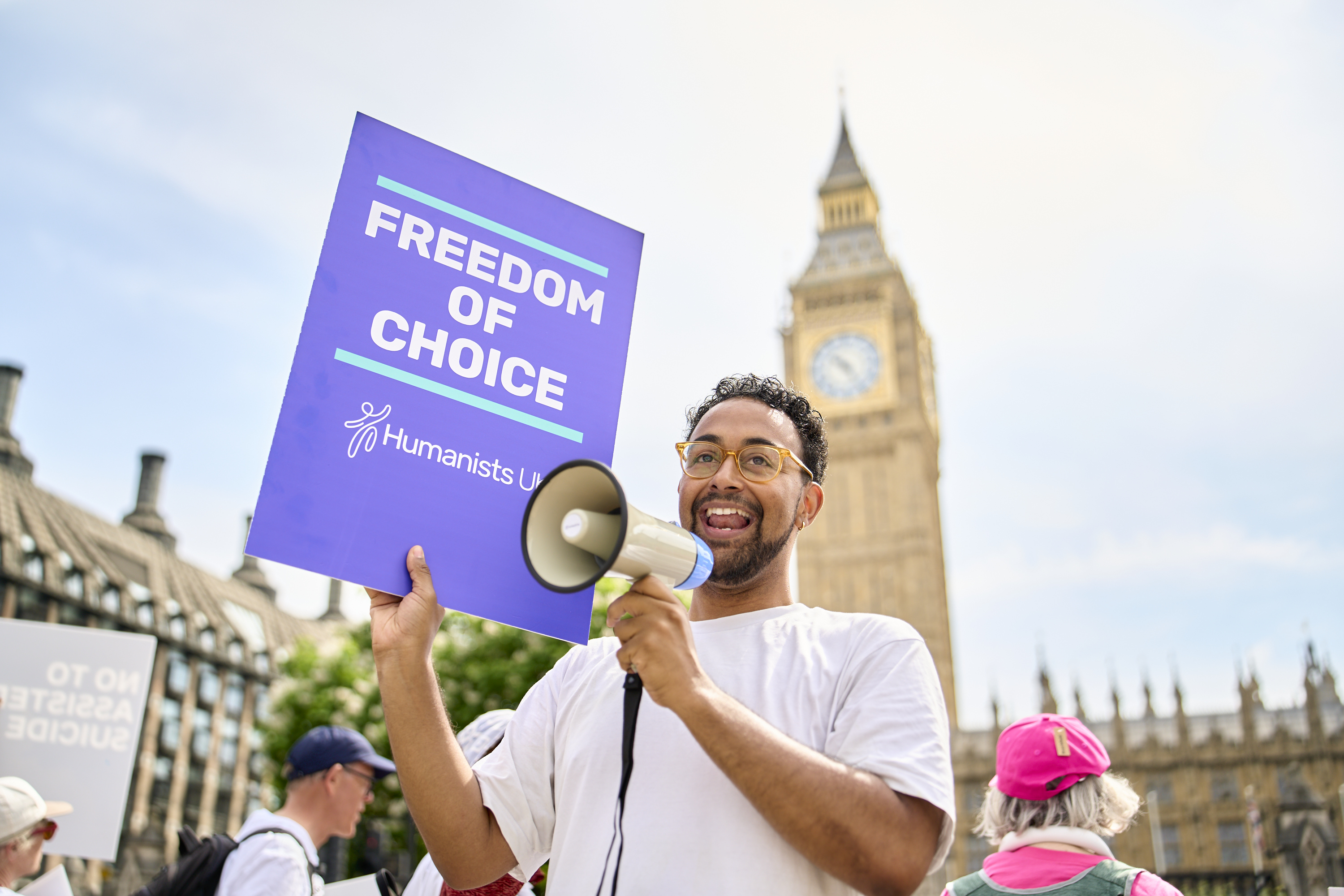
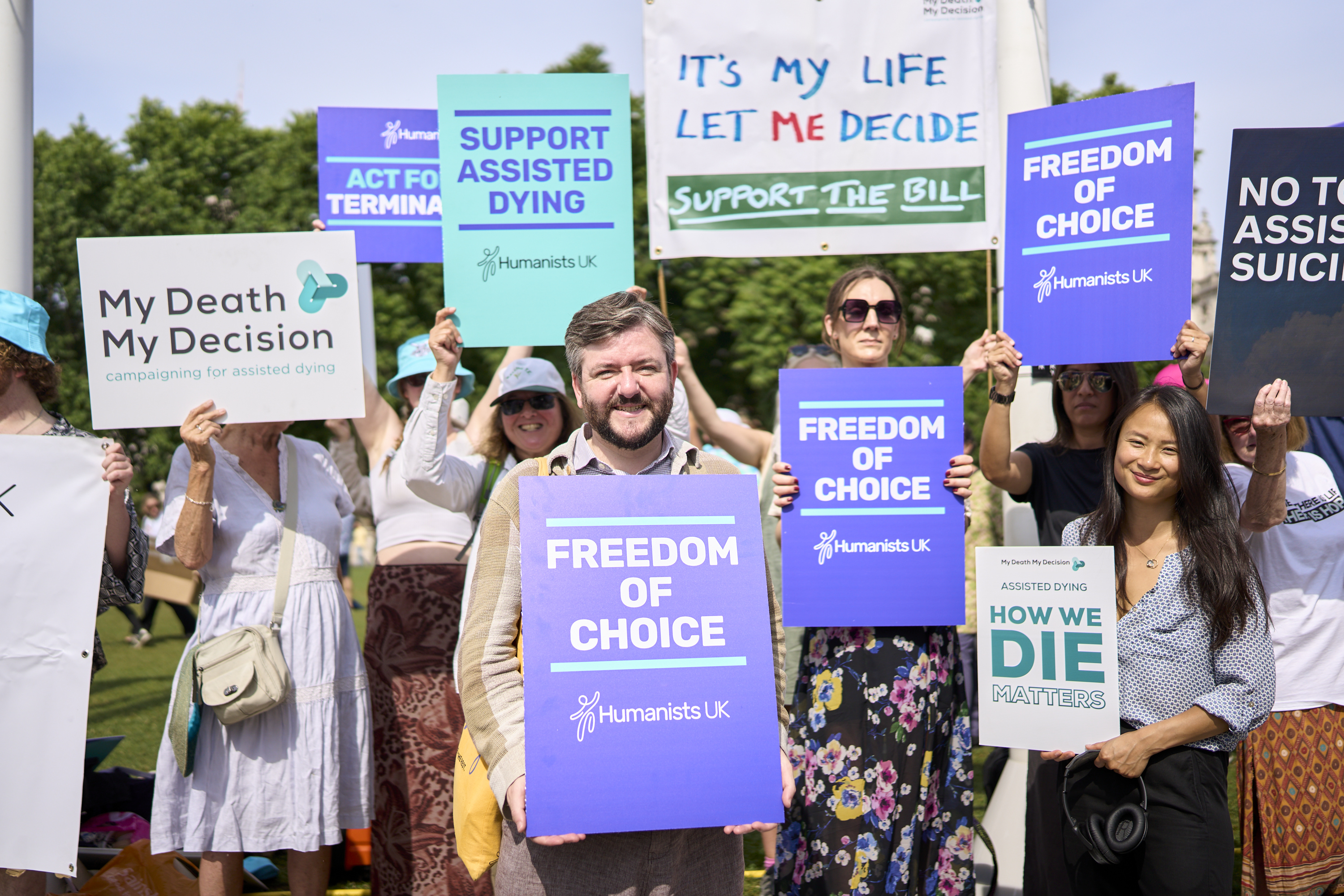
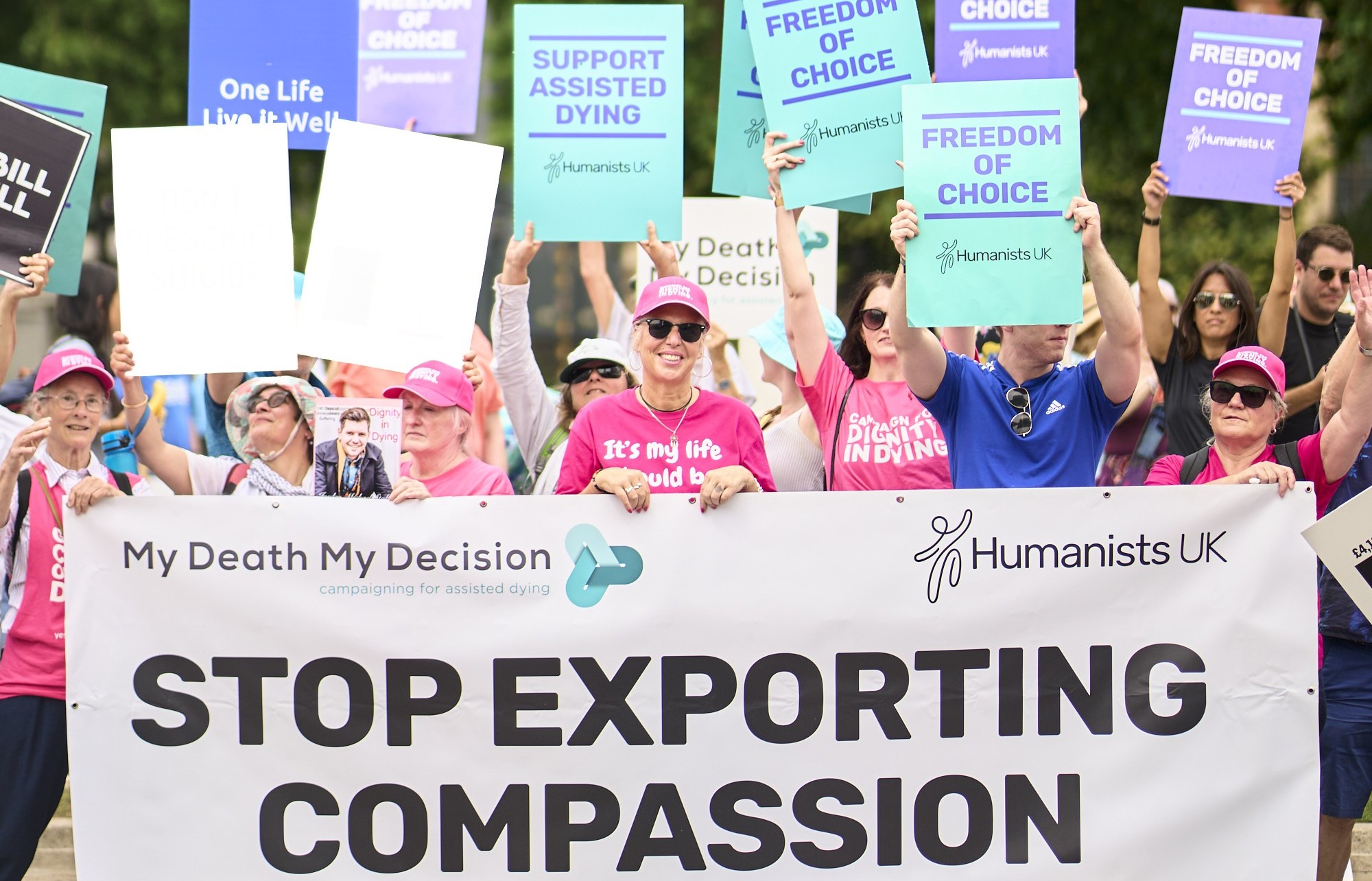
Humanists UK has people and their loved ones who would be affected by this change available for the press.
If you have been affected by the current assisted dying legislation, and want to use your story to support a change in the law, please email campaigns@humanists.uk.
Humanists defend the right of each individual to live by their own personal values, and the freedom to make decisions about their own life so long as this does not result in harm to others. Humanists do not share the attitudes to death and dying held by some religious believers, in particular that the manner and time of death are for a deity to decide, and that interference in the course of nature is unacceptable. We firmly uphold the right to life but we recognise that this right carries with it the right of each individual to make their own judgement about whether their life should be prolonged in the face of pointless suffering.
We recognise that any assisted dying law must contain strong safeguards and the international evidence from countries where assisted dying is legal shows that safeguards can be effective. We also believe that the choice of assisted dying should not be considered an alternative to palliative care, but should be offered together as in many other countries.
Humanists UK is the national charity working on behalf of non-religious people. Powered by over 150,000 members and supporters, we advance free thinking and promote humanism to create a tolerant society where rational thinking and kindness prevail. We provide ceremonies, pastoral care, education, and support services benefitting over a million people every year and our campaigns advance humanist thinking on ethical issues, human rights, and equal treatment for all.
Humanists UK is a member of the Assisted Dying Coalition, along with Friends at the End, Humanist Society Scotland, and End of Life Choices Jersey.