

Debate in the House of Lords has continued at a glacial pace, with only 2 groups of amendments out of the 74 remaining groups being debated. This is despite peers agreeing to additional time for the Bill to pass, which saw peers from both sides of the debate speaking of the importance of getting the Bill back to the Commons.
This means the fate of the Terminally Ill Adults (End of Life) Bill, which successfully passed the Commons last year, remains in jeopardy after over 1,100 amendments have been proposed. Humanists UK and My Death, My Decision urge members of the House of Lords to make sure the Bill is returned to the Commons in this parliamentary session.
What happens next?
Last night’s motion to give more time will now lead to peers entering into private negotiations, known as ‘the usual channels’, about how and when this time will be given. This may involve peers starting early or staying late for the debates, or debating on a Thursday. Lord Falconer and Baroness Smith of Basildon, the Leader of the House of Lords, both ruled out additional government time.
Many peers had hoped that last night’s non-binding vote would lead to peers picking up the pace during the debate. Even ardent opponents of assisted dying have argued that the House of Lords should work constructively to get the Bill to Third Reading. However, the debate continued slowly, with peers debating a large group of amendments relating to reversing the Commons’ decision to change the high court judge sign-off to a multidisciplinary panel.
In the first five debates, representing over 20 hours of debate, peers only debated 12 out of 84 groups of amendments, and more amendments continue to be tabled. A potential solution raised during the recent debate is for larger groups of amendments that deal with a small number of contentious issues of disagreement.
Filibustering in the Lords
Peers have been accused of attempting to filibuster the Assisted Dying Bill, essentially causing it to fail by proposing an unreasonable number of amendments and deliberately making unnecessary speeches to time it out. We’ve identified several instances of peers being explicitly clear that they are trying to block the Bill by means other than it being voted down.
Seven of the most vocal opponents of the Bill have put forward over 600 amendments between them. Amendments have included a pregnancy test for all applicants, including men, a one-year holiday ban for applicants and an unworkable requirement for half a dozen GP visits.
The Bill must pass all parliamentary stages before the end of the parliamentary session, expected in May 2026, or it fails.
Nathan Stilwell, Assisted Dying Campaigner at Humanists UK, said:
‘Every procedural delay, every stalling tactic, traps people in a system that denies them agency and compassion at the moment they need it most. The status quo forces suffering, strips families of dignity, and exports choice to foreign countries. It is not neutral; it is actively harmful. To preserve this system in the name of process is to ignore the real human cost paid by those who cannot afford to wait.’
Dave Sowry, Board Member of My Death, My Decision, said:
‘With last night’s vote, there continue to be ever-rising calls to speed up the debate and get the Assisted Dying Bill back to the Commons.
‘A small group, opposed to the Bill on principle, is still determined to shut it down rather than let it move forward. They are refusing to listen to the very people this Bill is meant to help: those nearing the end of their lives, whose final weeks could be made more bearable. Having supported my wife through an assisted death abroad, I know how vital it is that the system is clear and compassionate. This minority in the Lords should not be allowed to thwart both Parliament’s wider judgment and the public’s clear hopes for change.’
Notes
For further comment or information, media should contact Nathan Stilwell at nathan@humanists.uk or phone 07456 200033. (media only)
Humanists UK is making the following photos available to the media to use – credit to Simona Sermont/Humanists UK – 1, 2, 3, 4, 5.
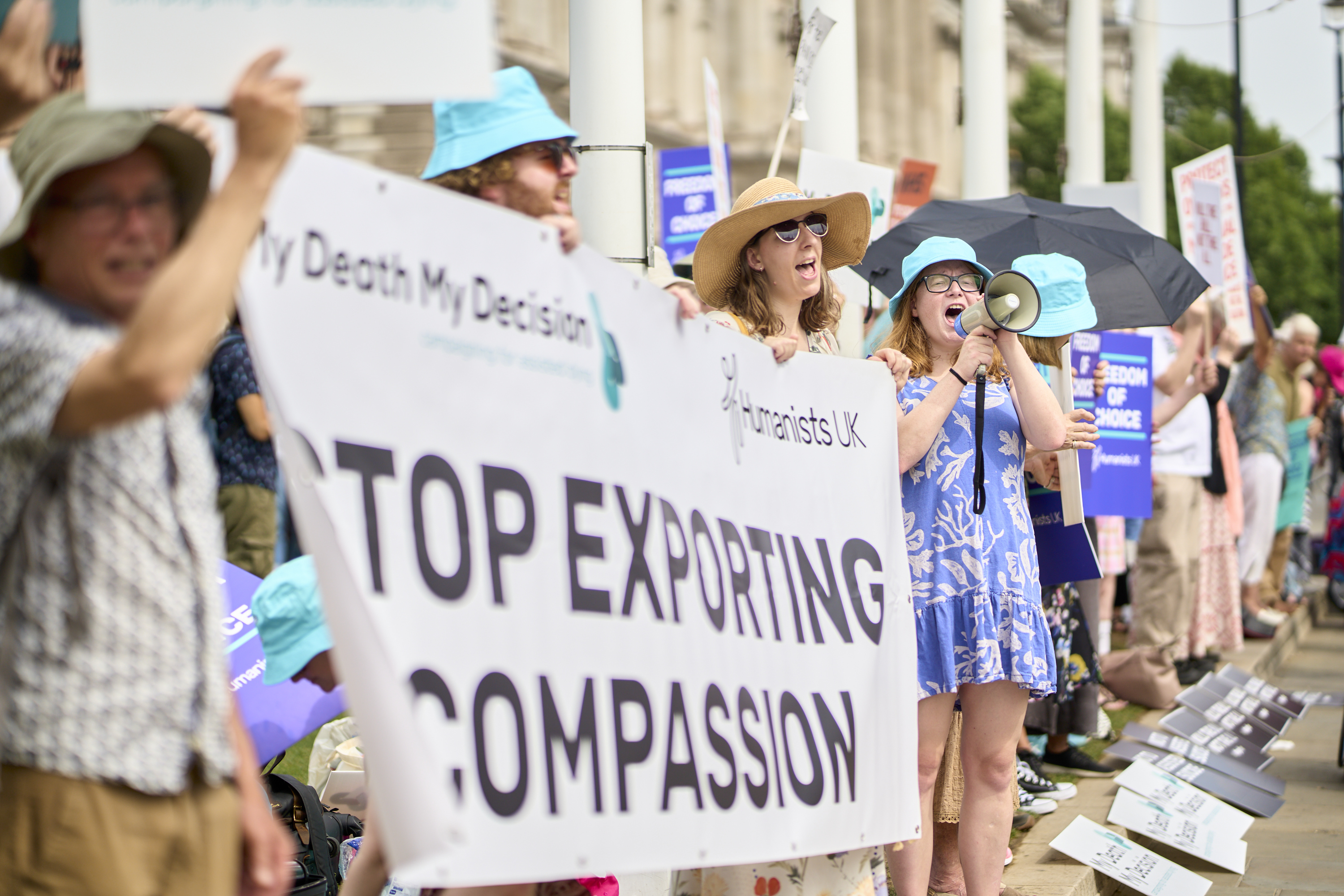
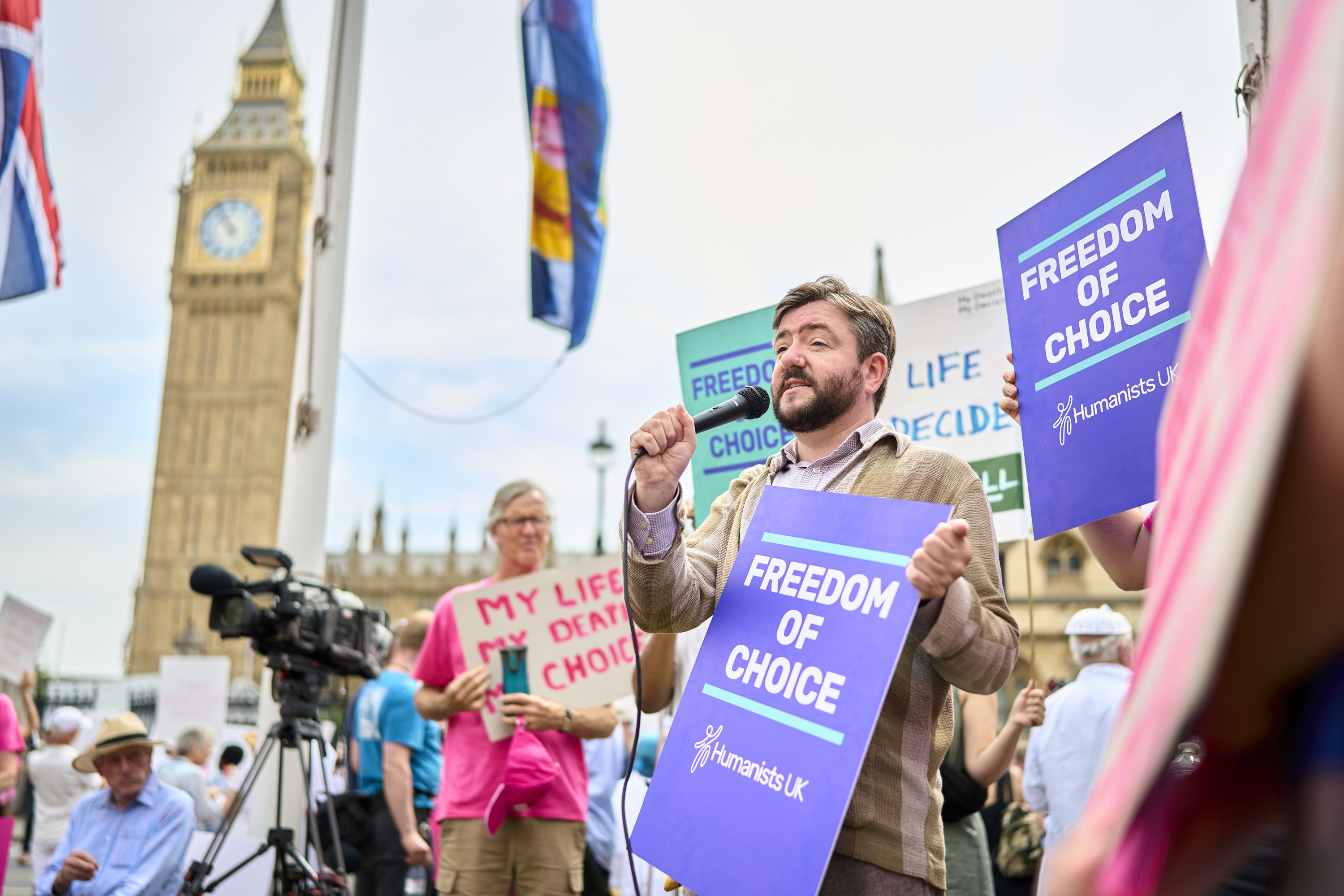
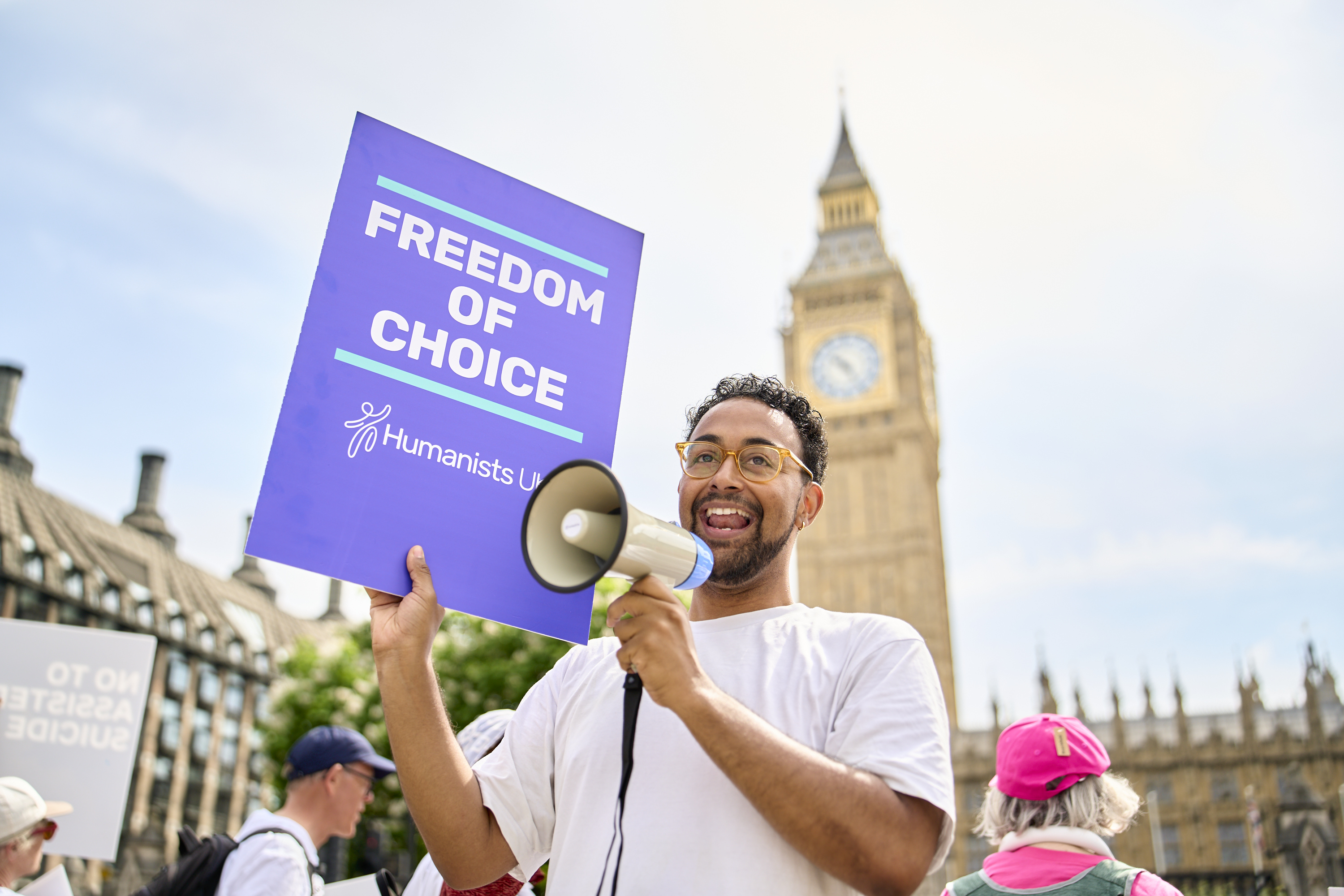
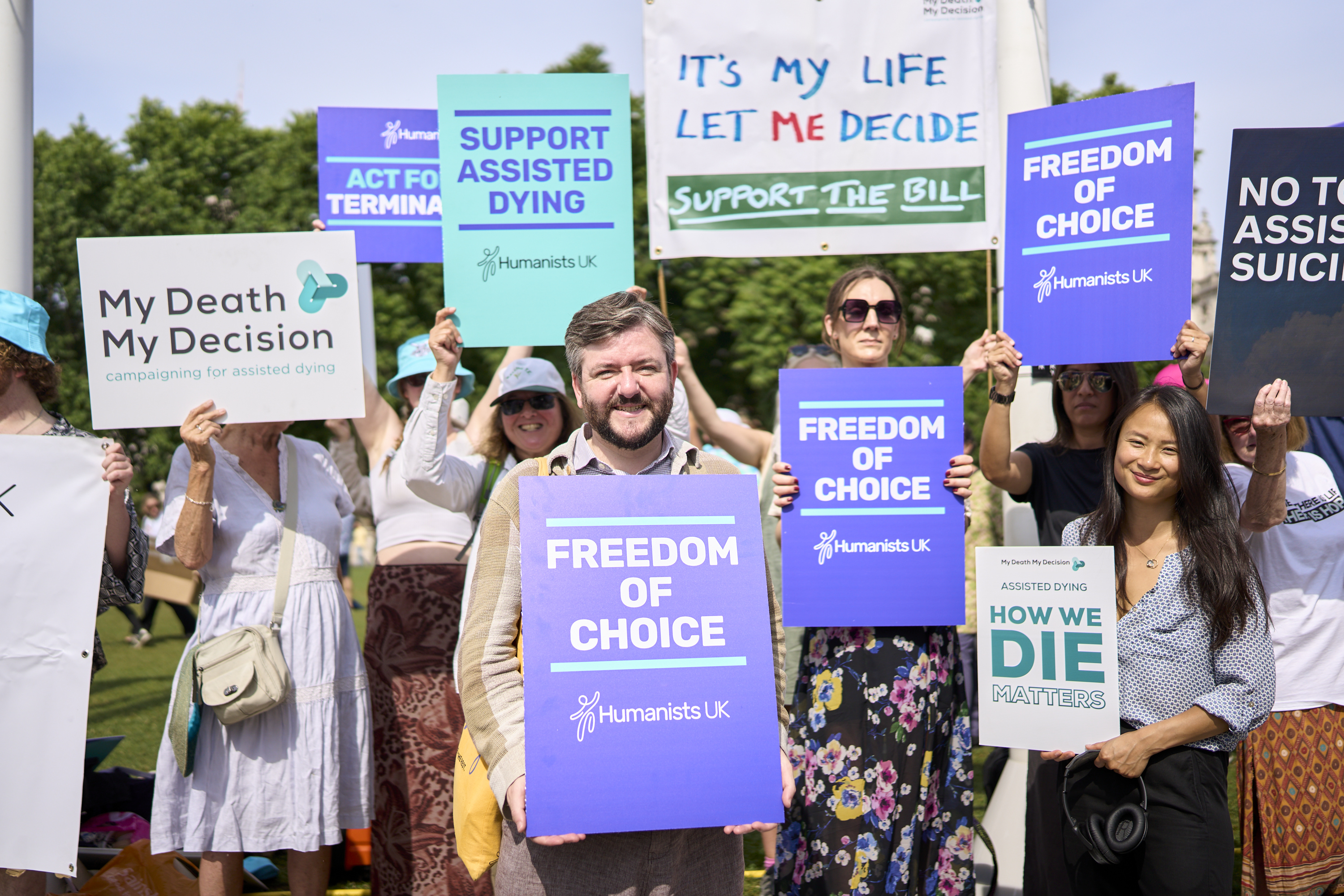
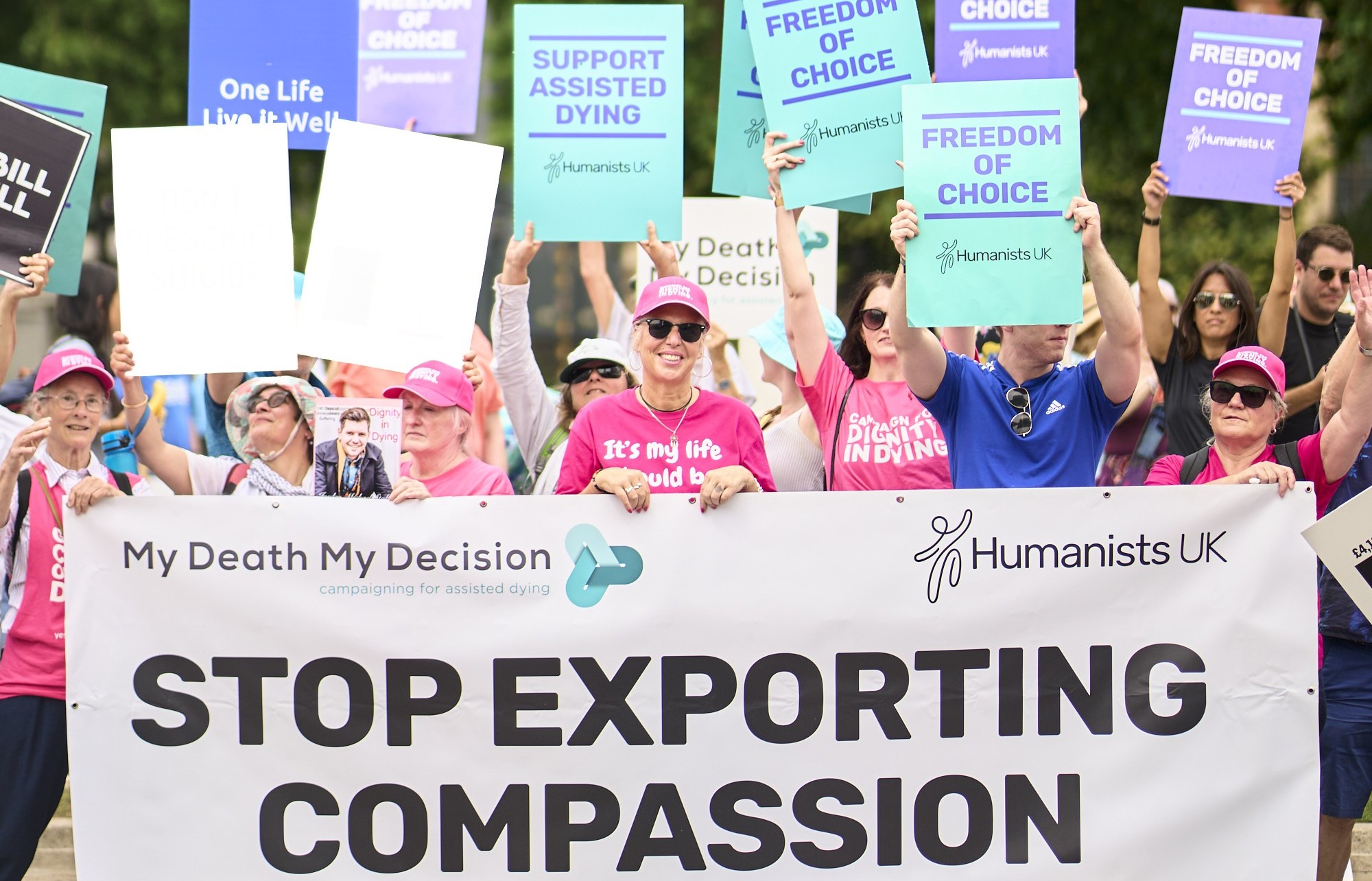
Humanists UK and My Death, My Decision have people and their loved ones who would be affected by this change available for the press.
If you have been affected by the current assisted dying legislation, and want to use your story to support a change in the law, please email campaigns@humanists.uk.
Humanists defend the right of each individual to live by their own personal values, and the freedom to make decisions about their own life so long as this does not result in harm to others. Humanists do not share the attitudes to death and dying held by some religious believers, in particular that the manner and time of death are for a deity to decide, and that interference in the course of nature is unacceptable. We firmly uphold the right to life but we recognise that this right carries with it the right of each individual to make their own judgement about whether their life should be prolonged in the face of pointless suffering.
We recognise that any assisted dying law must contain strong safeguards and the international evidence from countries where assisted dying is legal shows that safeguards can be effective. We also believe that the choice of assisted dying should not be considered an alternative to palliative care, but should be offered together as in many other countries.
Humanists UK is the national charity working on behalf of non-religious people. Powered by over 150,000 members and supporters, we advance free thinking and promote humanism to create a tolerant society where rational thinking and kindness prevail. We provide ceremonies, pastoral care, education, and support services benefitting over a million people every year and our campaigns advance humanist thinking on ethical issues, human rights, and equal treatment for all.
My Death, My Decision is a grassroots campaign group that wants the law in England and Wales to allow mentally competent adults who are terminally ill or intolerably suffering from an incurable condition the option of a legal, safe, and compassionate assisted death. With the support of over 3,000 members and supporters, we advocate for an evidence-based law that would balance individual choice alongside robust safeguards and finally give the people of England and Wales choice at the end of their lives.
Humanists UK and My Death, My Decision are both members of the Assisted Dying Coalition, along with Friends at the End, Humanist Society Scotland, and End of Life Choices Jersey.