

The Scottish Parliament has today voted against Liam McArthur MSP’s Assisted Dying for Terminally Ill Adults (Scotland) Bill, by 69 votes to 57, thereby rejecting legislation that would have legalised assisted dying in Scotland.
The Bill:
The Bill would have allowed eligible terminally ill adults in Scotland to legally request an assisted death. To qualify, a person would have needed to:
- Have lived in Scotland for at least 12 months
- Be registered with a Scottish GP
- Be terminally ill with six months or fewer left to live
- Have mental capacity
Individuals would first have signed an initial declaration, been assessed independently by two medics, including consideration of any pressure or coercion, and then have completed a reflection period of 14 days, reducible to 48 hours if death was expected sooner.
If they still wished to proceed, they would have made a second declaration before being provided with an approved substance, which the Bill said must be self-administered.
The scrutiny:
Liam McArthur MSP first set out his proposal in September 2021, after which it went through an extended period of consultation and development before the Bill was introduced in March 2024. That process included a full public consultation, which received more than 14,000 responses, the largest response to any consultation on a Members’ Bill in Scottish Parliament history. This included detailed consideration of the evidence submitted, and around 18 months of drafting and policy work.
The Bill passed Stage 1 in May 2025 by 70 votes to 56. Over 300 amendments were debated during Stage 3, a high number by Holyrood standards, and a clear demonstration of just how much scrutiny this Bill has been given.
Recent constituency-level polling said support for a change in the law exists in every Scottish constituency, with 78% support overall.
Andrew Copson, Chief Executive of Humanists UK, said:
‘MSPs have failed suffering people and their families and denied the people of Scotland the compassionate choices that many around the world already benefit from.’
Notes
For further comment or information, media should contact Nathan Stilwell at nathan@humanists.uk or phone 07456 200033. (media only)
Humanists UK is making the following photos available to the media to use – credit to Simona Sermont/Humanists UK – 1, 2, 3, 4, 5.
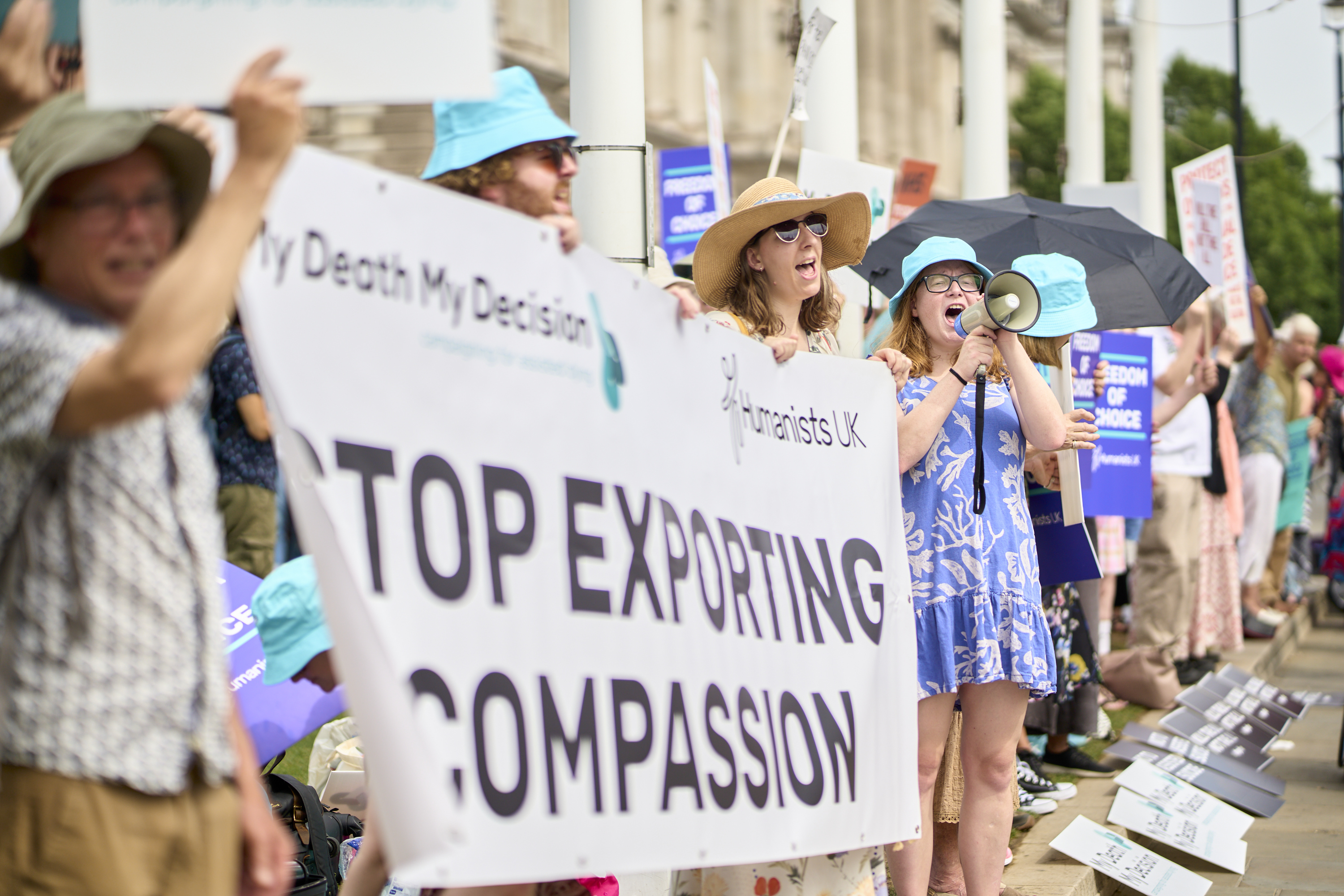
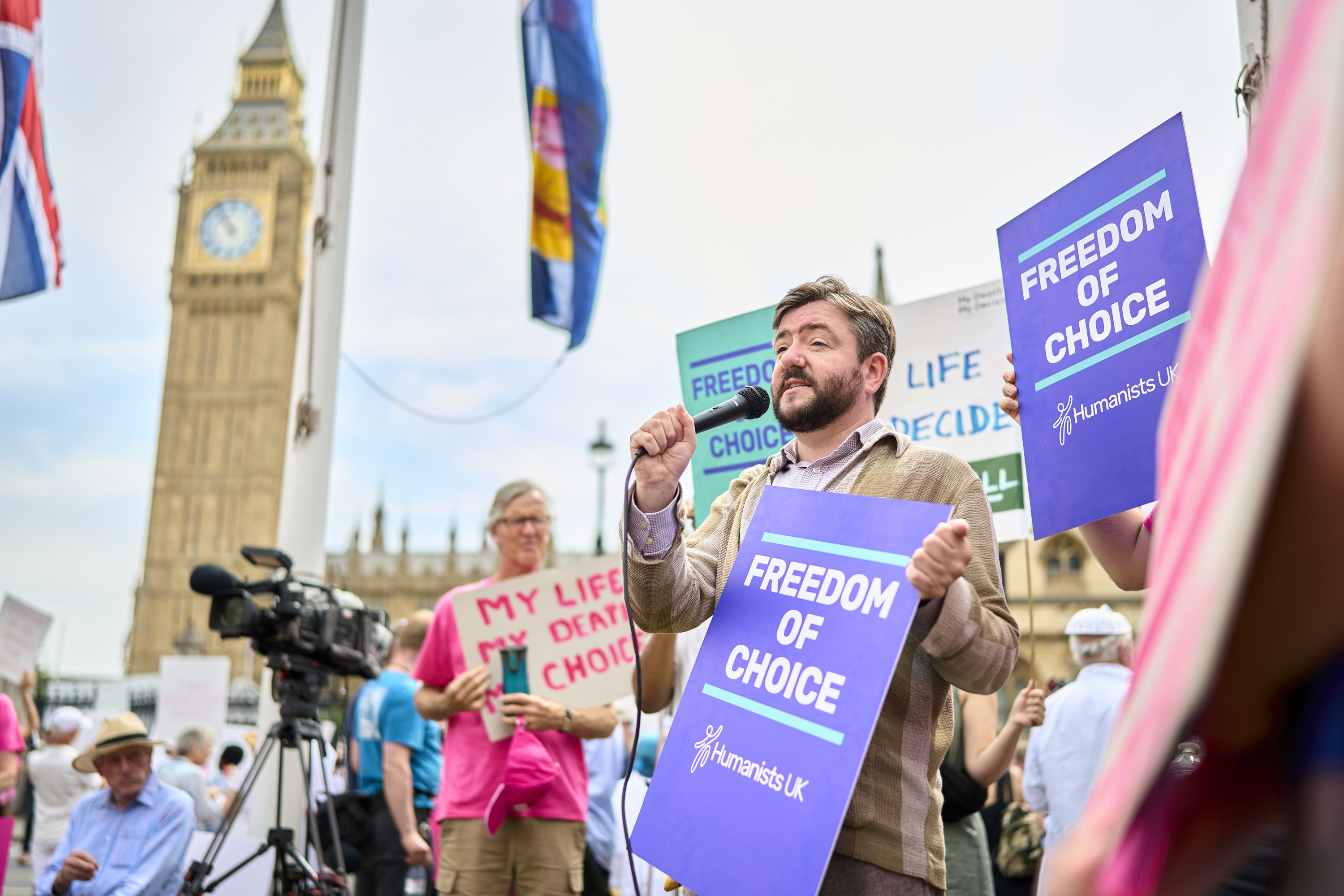

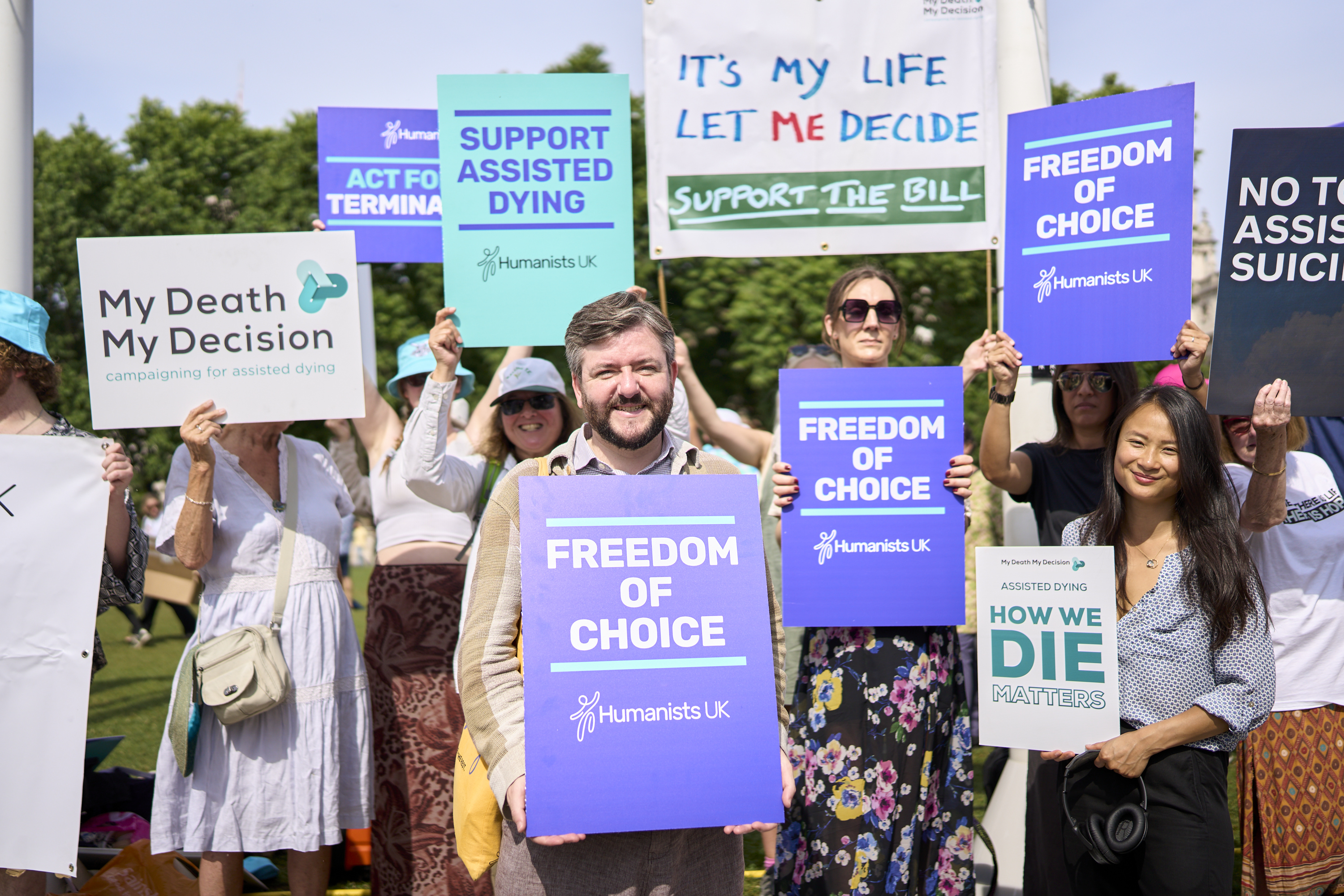
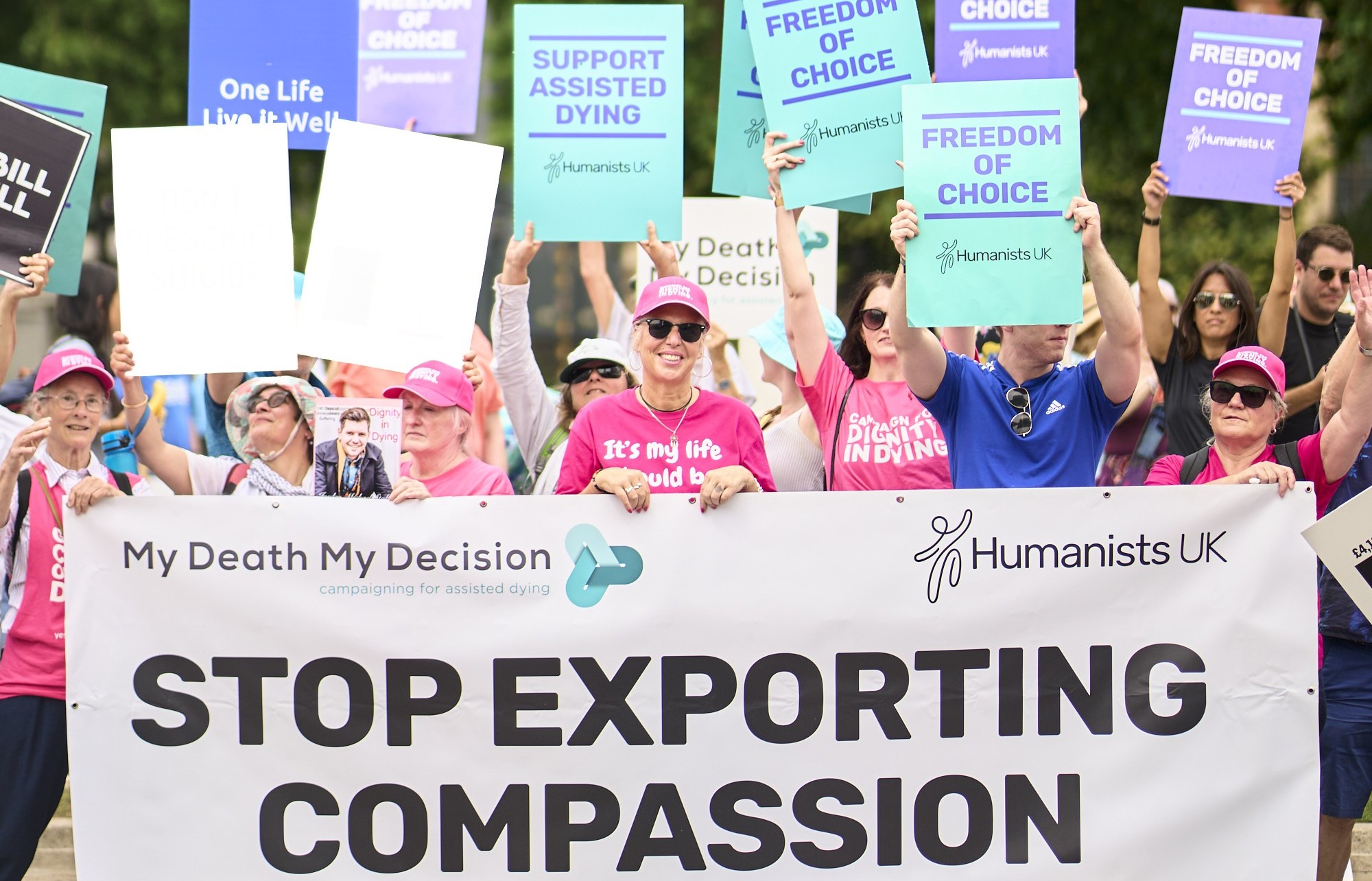
If you have been affected by the current assisted dying legislation, and want to use your story to support a change in the law, please email campaigns@humanists.uk.
Humanists defend the right of each individual to live by their own personal values, and the freedom to make decisions about their own life so long as this does not result in harm to others. Humanists do not share the attitudes to death and dying held by some religious believers, in particular that the manner and time of death are for a deity to decide, and that interference in the course of nature is unacceptable. We firmly uphold the right to life but we recognise that this right carries with it the right of each individual to make their own judgement about whether their life should be prolonged in the face of pointless suffering.
We recognise that any assisted dying law must contain strong safeguards and the international evidence from countries where assisted dying is legal shows that safeguards can be effective. We also believe that the choice of assisted dying should not be considered an alternative to palliative care, but should be offered together as in many other countries.
Humanists UK is the national charity working on behalf of non-religious people. Powered by over 150,000 members and supporters, we advance free thinking and promote humanism to create a tolerant society where rational thinking and kindness prevail. We provide ceremonies, pastoral care, education, and support services benefitting over a million people every year and our campaigns advance humanist thinking on ethical issues, human rights, and equal treatment for all.
Humanists UK and My Death, My Decision are both members of the Assisted Dying Coalition, along with Friends at the End, Humanist Society Scotland, and End of Life Choices Jersey.