

Peers have been accused of attempting to filibuster the Assisted Dying Bill, essentially causing it to fail by proposing an unreasonable number of amendments and deliberately making unnecessary speeches to time it out. Opponents of assisted dying have responded by claiming the amendments are just for scrutiny and improving the Bill. However, some peers have been overt about their willingness to filibuster the Assisted Dying Bill.
There are several cases of Peers being explicitly clear that they are trying to block the Bill by means other than it being voted down at Third Reading – which may mean it fails even if a majority support it:
- After the Commons vote, the Times reported anonymously that opponents pledged to use ‘every means possible’ to prevent it becoming law. One peer told The Times there were ‘plenty of black arts that could be used to kill the bill off’, including tabling many amendments, and that they ‘could not imagine how it could get through’.
- Similarly, after the Commons vote, GB News reported: ‘A number of leading members of the House of Lords have already vowed to try to scupper the legislation’. Immediately quoted is Lord Frost saying ‘Many of us will now oppose this Bill in the Lords, and entirely legitimately… The fight goes on.’
- Baroness Campbell told the Disability News Service that her role will be to ‘amend, amend, amend, amend, amend, so it becomes so tight that anyone would find it difficult to get it’.
Lord Moylan posted on X ‘Peers are justified in blocking assisted dying bill’ and shared a Times editorial saying peers that ‘Peers who want to continue blocking this bill and prevent it from ever becoming law are justified in doing so’ – something clearly a reference to the use of amendments and speeches to block the bill. Lord Moylan is vocal against assisted dying on X, and shared a post saying ‘The final duty the Hereditaries can do for their country is to kill this appalling Assisted Dying Bill’.
Richy Thompson, Director of Public Affairs and Policy at Humanists UK, said:
‘The sheer scale and nature of the amendments being tabled make it increasingly difficult to accept claims that this is simply about careful scrutiny. What we are seeing instead is a coordinated attempt by a small number of opponents to delay, obstruct, and ultimately prevent Parliament from properly considering the Assisted Dying Bill. The House of Lords has a vital role in improving legislation, but using procedural tactics to run down the clock risks undermining both democratic accountability and public trust.’
Richard Osborne, Board Member of My Death, My Decision, said:
‘The mask is well and truly slipping. It is no longer credible for some peers to claim they are merely scrutinising the Assisted Dying Bill when there are repeated, overt statements, and even anonymous briefings, openly admitting an intention to block, filibuster or wreck it. Scrutiny improves legislation; deliberately trying to run down the clock is something else entirely, and the public can see the difference.’
Other peers trying to block the Bill:
Other peers have also vowed to stop the legislation, whether by voting it down or by filibustering it. The House of Lords is an unelected chamber, unrepresentative of the population and even unrepresentative of the last election. There are no accountability measures for the public, and the House of Lords contains 26 Church of England archbishops and bishops known as the ‘Lords Spiritual’ who have an automatic right to sit and vote.
- Lord Alton wrote in Conservative Women ‘My fellow peers and I will do our damnedest to halt these evil abortion and assisted dying Bills’, and on Politics.co.uk ‘the Lords is within its rights to do what is necessary to make the bill safer for vulnerable people and, if necessary, to reject it entirely’.
- Baroness Monckton wrote in the MailOnline: ‘Why I’ll fight in the Lords against this breathtakingly cruel and ignorant assisted suicide Bill’.
- The Bishop of London (now Archbishop of Canterbury-designate) and the Archbishop of York said during the Second Reading debate that they will force a vote on assisted dying. The Bishop of London told the Standard, ‘I will vote against the Assisted Dying Bill’. The Catholic Archbishop of Westminster told the Times ‘The task is now clear: every effort must be made to limit the damage that will be done by this decision.’
An overwhelming number of amendments:
Over 1,150 amendments have been proposed to the Bill. For a 51-page Bill, this is an outrageous number of amendments. There are an average of 22.6 amendments per page so far. The Bill with the next highest number of amendments this session, the Children’s Wellbeing Schools Bill, had only 5.3 per page.
- Baroness Finlay (190 amendments), Baroness Grey-Thompson (130 amendments) and Lord Moylan (46 amendments) were featured together in an article by The Telegraph titled ‘The peers accused of thwarting the euthanasia bill’. The same article claims that Lord Farmer, who describes the Bill as ‘an atheist bill that assumes there is nothing after death’, is working with Grey-Thompson and Finlay.
- Baroness Grey-Thompson shared on X ‘I have tabled many amendments. Some were ruled out of scope. There are probably another 50 that I haven’t tabled.’ Despite already tabling 130 amendments herself. One of her amendments was for a mandatory pregnancy test for all applicants, including men.
Baroness Berger (19 amendments) was featured in an article by the Jewish Chronicle titled ‘Baroness Berger tells the government it’s not too late to stop Assisted Dying Bill’
When mass amendment sits alongside explicit pledges by peers to stop the Bill entirely, the distinction between scrutiny and obstruction becomes blurred. Peers who claim a nuanced, good-faith approach should therefore explicitly disavow attempts to wreck the Bill through procedural overload. Amendments have included a holiday ban for all applicants and an unworkable requirement for half a dozen GP visits.
Seven of the most vocal opponents to the Bill have put forward over 600 amendments between them. It would take two decades to debate all the current amendments.
The Bill must pass all parliamentary stages before Spring 2026, or it fails.
Notes
For further comment or information, media should contact Nathan Stilwell at nathan@humanists.uk or phone 07456 200033. (media only)
Humanists UK is making the following photos available to the media to use – credit to Simona Sermont/Humanists UK – 1, 2, 3, 4, 5.
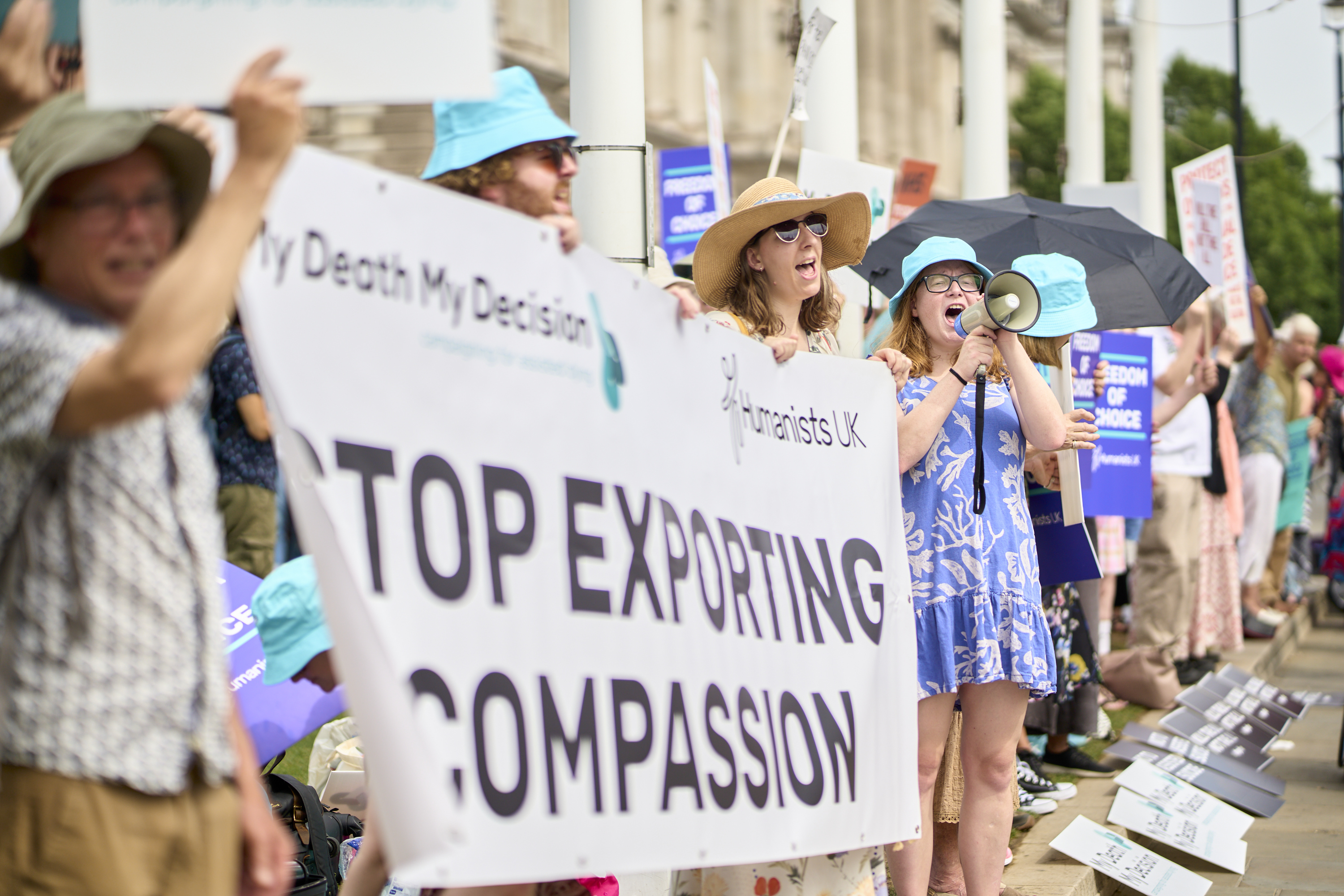
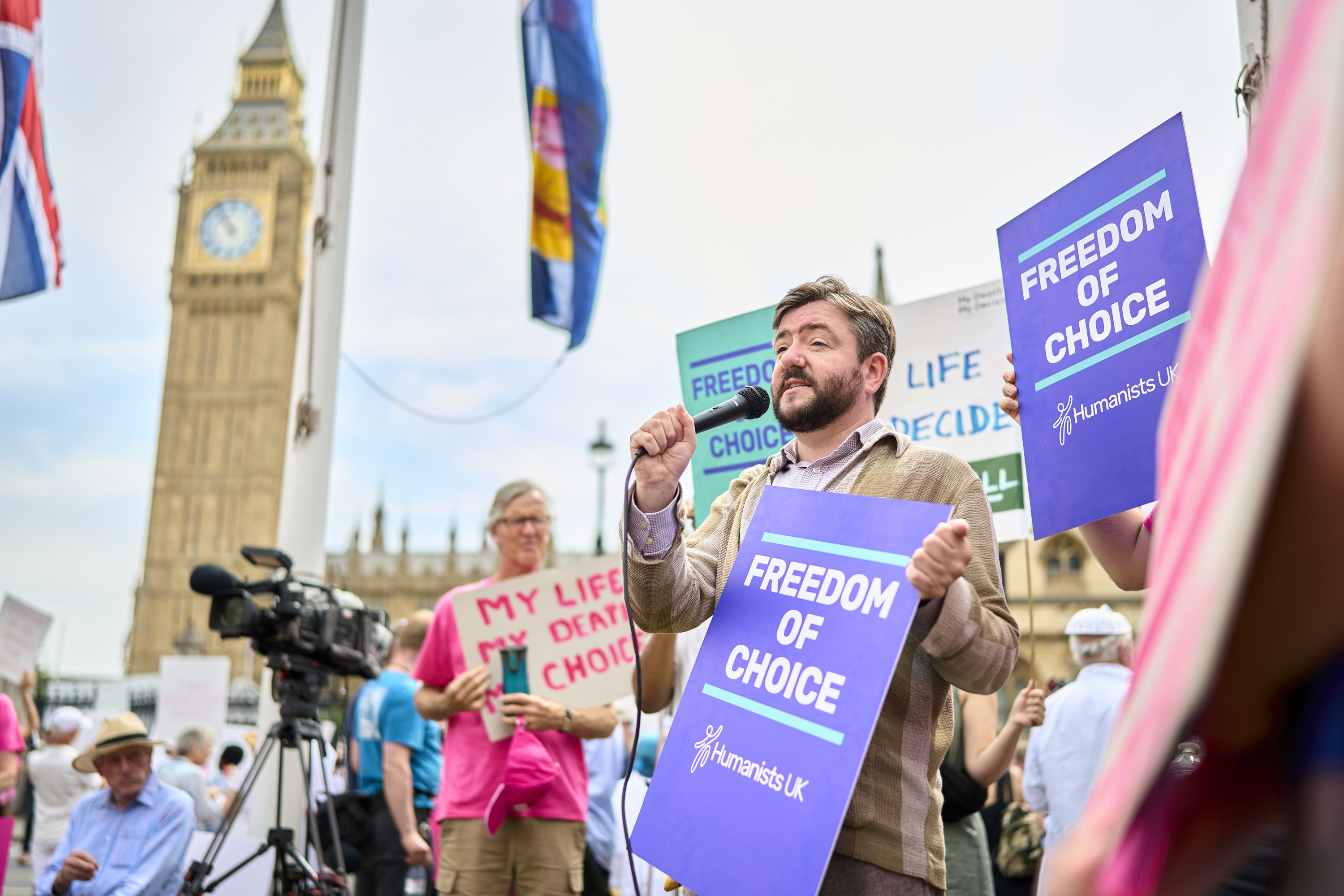
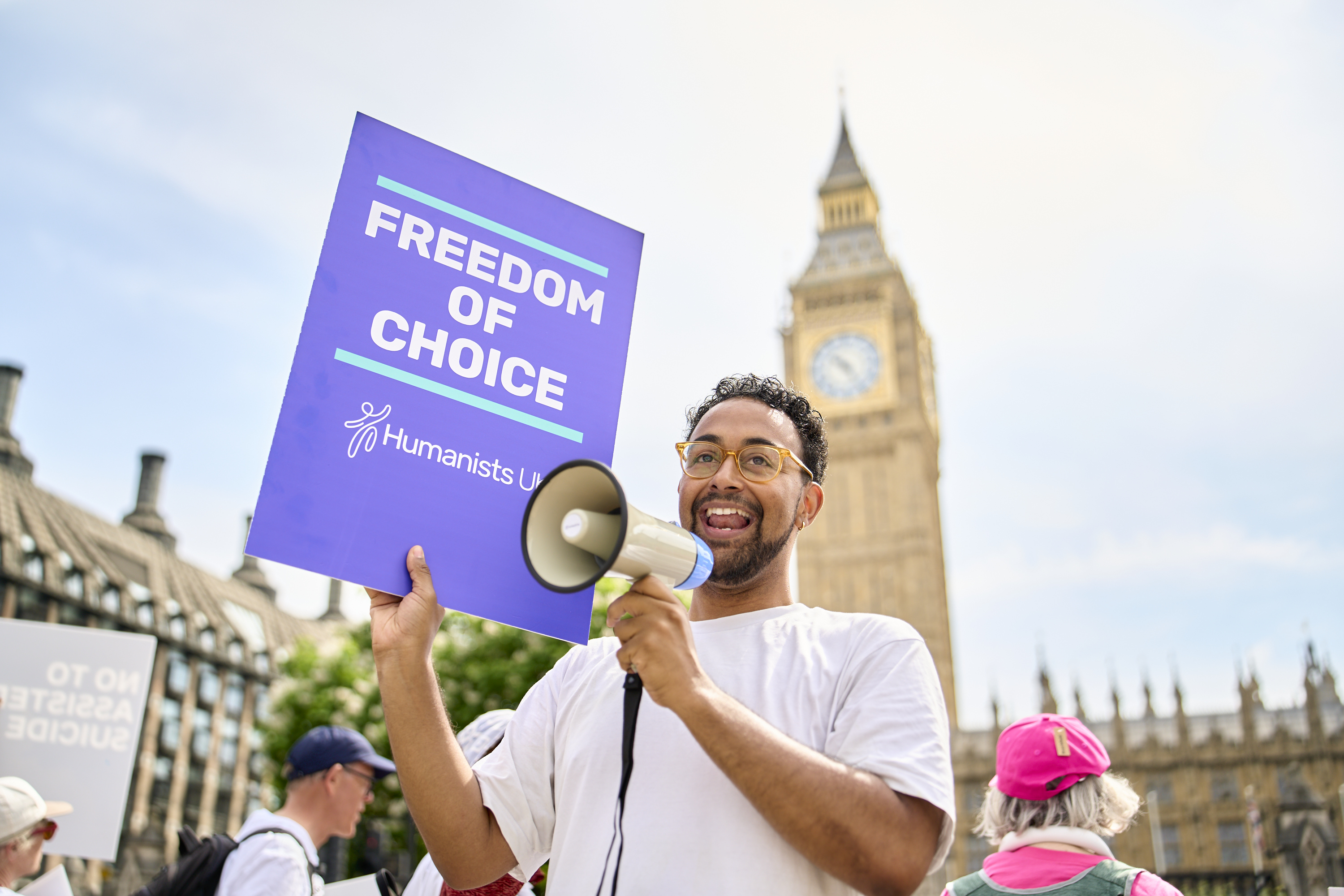
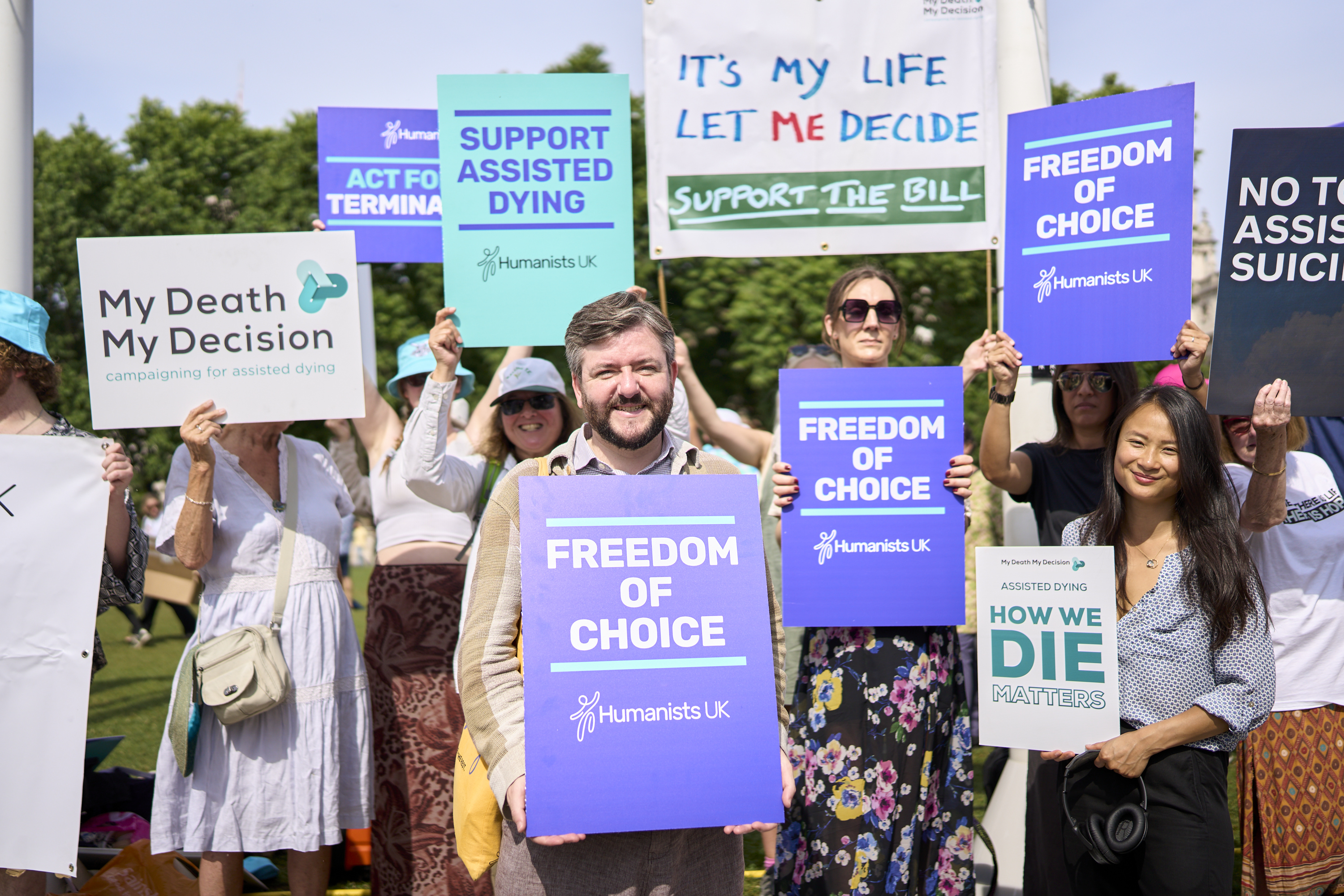
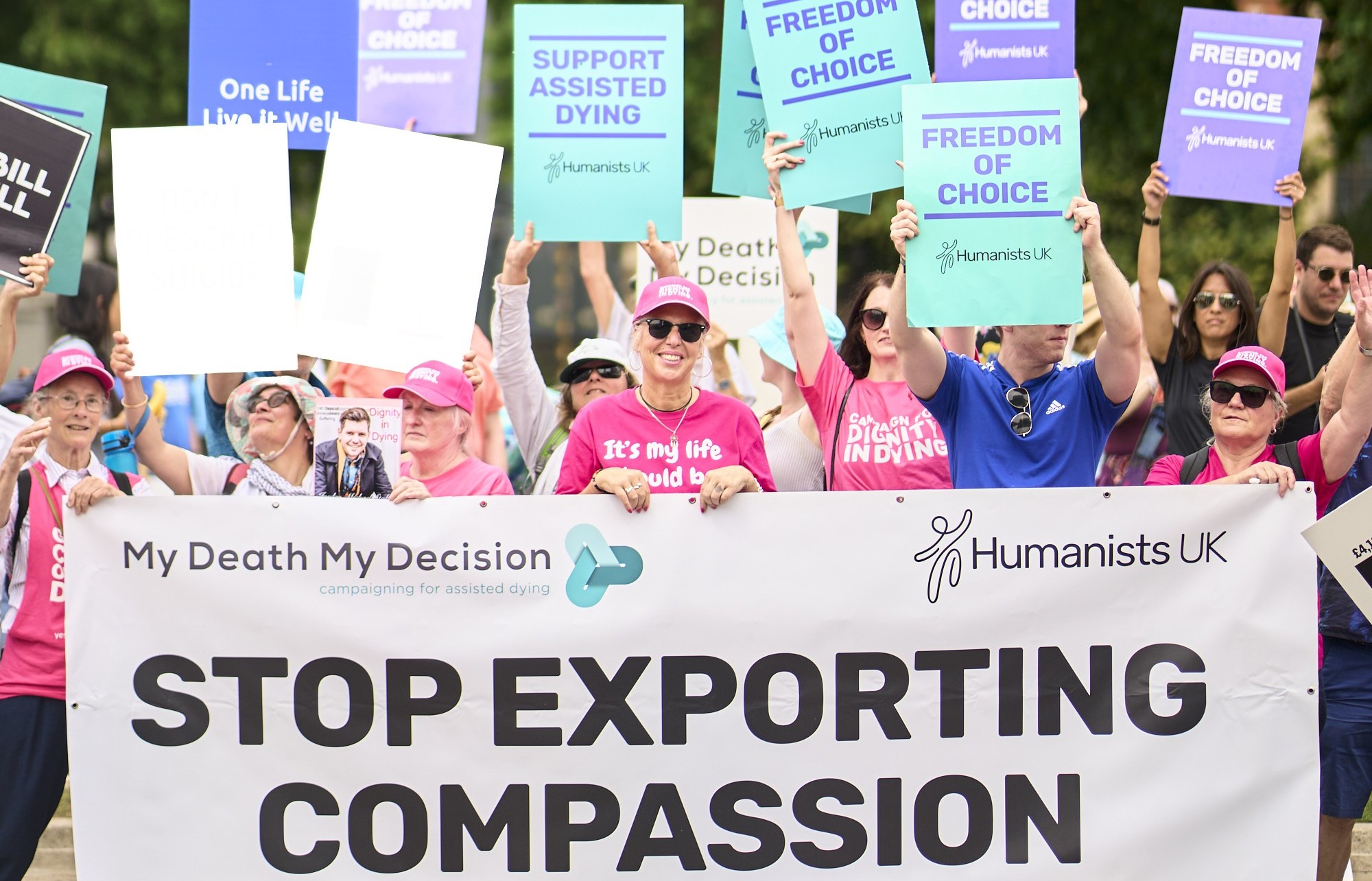
Humanists UK and My Death, My Decision have people and their loved ones who would be affected by this change available for the press.
If you have been affected by the current assisted dying legislation, and want to use your story to support a change in the law, please email campaigns@humanists.uk.
Humanists defend the right of each individual to live by their own personal values, and the freedom to make decisions about their own life so long as this does not result in harm to others. Humanists do not share the attitudes to death and dying held by some religious believers, in particular that the manner and time of death are for a deity to decide, and that interference in the course of nature is unacceptable. We firmly uphold the right to life but we recognise that this right carries with it the right of each individual to make their own judgement about whether their life should be prolonged in the face of pointless suffering.
We recognise that any assisted dying law must contain strong safeguards and the international evidence from countries where assisted dying is legal shows that safeguards can be effective. We also believe that the choice of assisted dying should not be considered an alternative to palliative care, but should be offered together as in many other countries.
Humanists UK is the national charity working on behalf of non-religious people. Powered by over 150,000 members and supporters, we advance free thinking and promote humanism to create a tolerant society where rational thinking and kindness prevail. We provide ceremonies, pastoral care, education, and support services benefitting over a million people every year and our campaigns advance humanist thinking on ethical issues, human rights, and equal treatment for all.
My Death, My Decision is a grassroots campaign group that wants the law in England and Wales to allow mentally competent adults who are terminally ill or intolerably suffering from an incurable condition the option of a legal, safe, and compassionate assisted death. With the support of over 3,000 members and supporters, we advocate for an evidence-based law that would balance individual choice alongside robust safeguards and finally give the people of England and Wales choice at the end of their lives.
Humanists UK and My Death, My Decision are both members of the Assisted Dying Coalition