

New amendments tabled in the House of Lords would require terminally ill people seeking an assisted death to have a series of recent GP appointments, including mandatory home visits, before they could even apply. Humanists UK and My Death, My Decision warn that these proposals would make the Assisted Dying Bill completely inaccessible for many dying patients and urge peers to withdraw them. Peers are due to debate the Bill today.
Several amendments propose strict new eligibility hurdles:
- Amendment 19 (Lord Rook): Must be registered with a GP for 12 months and seen in person at least twice.
- Amendment 20 (Baroness O’Loan): Requires four GP appointments in 12 months plus a home visit.
- Amendment 21 (Baroness Grey-Thompson): Requires an ‘established relationship’ with a GP with detailed knowledge of the person.
- Amendments 28 & 29 (Baroness Finlay): Introduce further requirements for GP home visits.
- Amendments 30B, 265A, 443A (Baroness Lawlor): Requires the GP to have known the person for at least two years and has seen them six times.
Why are these proposals unrealistic and discriminatory:
Many terminally ill people spend their final months primarily under hospital specialists, consultants, or palliative care teams, rather than their GP. Others may:
- spend long periods in hospital or hospice,
- have recently moved due to illness and changed GP practice,
- receive most care from specialists rather than primary care,
- have a sudden serious illness that means they did not require earlier GP visits in the required time,
- not have an ‘established relationship’ with a GP featuring detailed knowledge due to their local practice not consistently giving them the same GP,
- or be temporarily living with family for support.
These are entirely normal pathways through the healthcare system at the end of life. They simply mean that many dying people will not have had multiple recent GP appointments or a home visit, and therefore be excluded by these amendments regardless of their clinical eligibility.
The amendments are also very similar to each other, meaning that debate on each of them in turn will be repetitive and waste precious time.
Barriers disguised as a safeguard
Together, the peers putting forward these amendments have proposed 357 in total. Analysis by Humanists UK and My Death, My Decision has shown that seven of the most vocal opponents to the Bill have put forward over 600 amendments between them.
Help us support the Assisted Dying Bill and stop the filibustering in the House of Lords. Raise the issue and send a message to peers today.

Peers have been accused of attempting to filibuster the Bill, essentially causing it to fail by proposing an unreasonable number of amendments and deliberately making unnecessary speeches in order to time it out. Analysis suggests it would take two decades to debate all the current amendments.
The Bill must pass all parliamentary stages before Spring 2026, or it fails.
Richy Thompson, Director of Public Affairs and Policy at Humanists UK, said:
‘These amendments bear no resemblance to how end-of-life care actually works. Many terminally ill people are looked after mainly by specialists, in hospitals or hospices, or after moving to be closer to family. Many GP Practices are not set up such that patients consistently see the same GP. Their ability to access assisted dying should not depend on whether a GP happened to see them a certain number of times, or make a home visit or indeed had built up an “established relationship” with detailed knowledge. These proposals would shut people out of the process entirely, and these peers should withdraw them.’
Dave Sowry, Board Member of My Death, My Decision, said:
‘Let’s be clear: these amendments are designed to make the Bill unworkable by imposing hurdles that many dying people could never meet. They ignore how end-of-life care actually operates and would deny patients a fair chance to access the law. Creating a maze of unnecessary requirements is simply filibustering in disguise, and the public deserves better. Peers must withdraw these amendments.’
Notes
For further comment or information, media should contact Nathan Stilwell at nathan@humanists.uk or phone 07456 200033. (media only)
Humanists UK is making the following photos available to the media to use – credit to Simona Sermont/Humanists UK – 1, 2, 3, 4, 5.
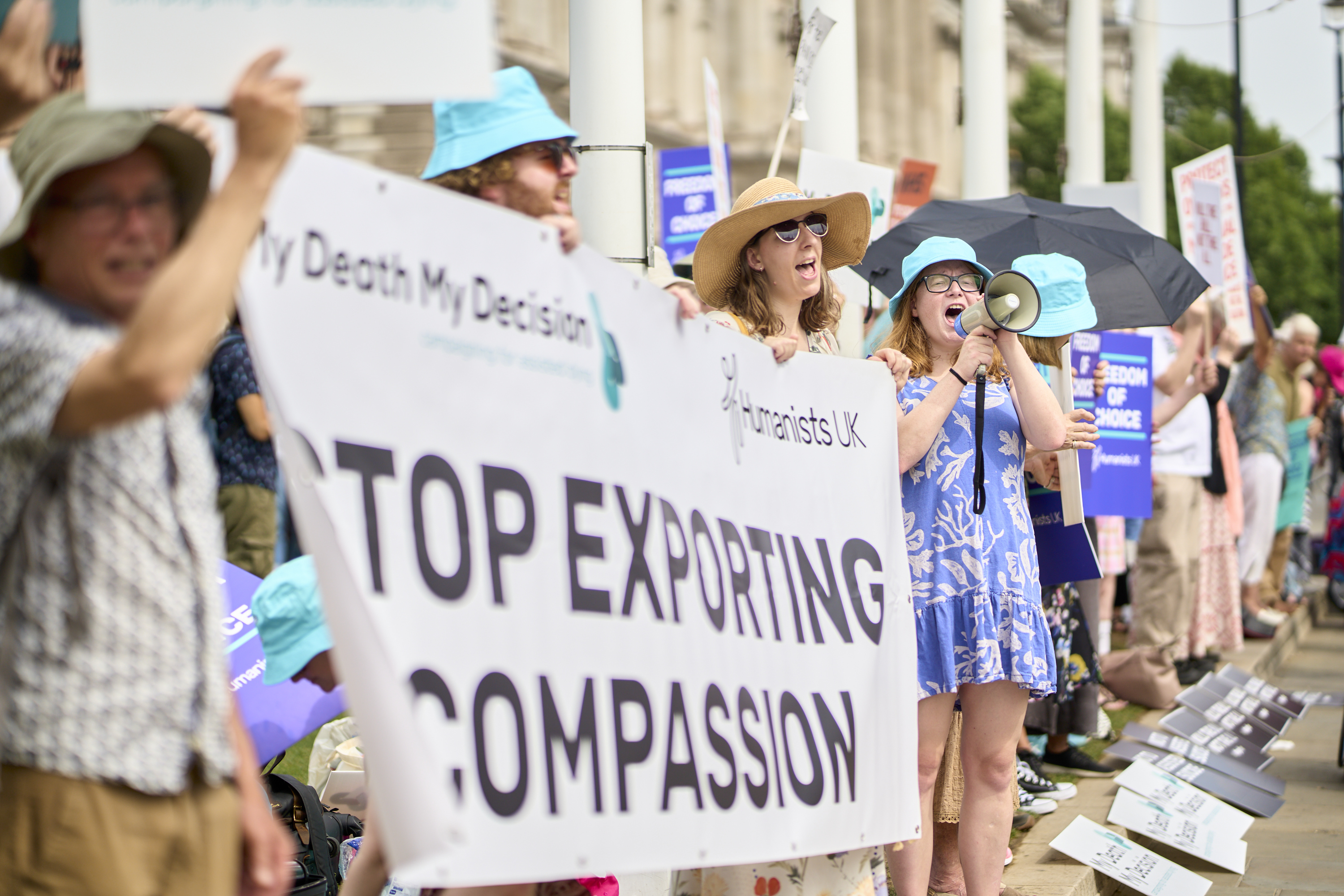
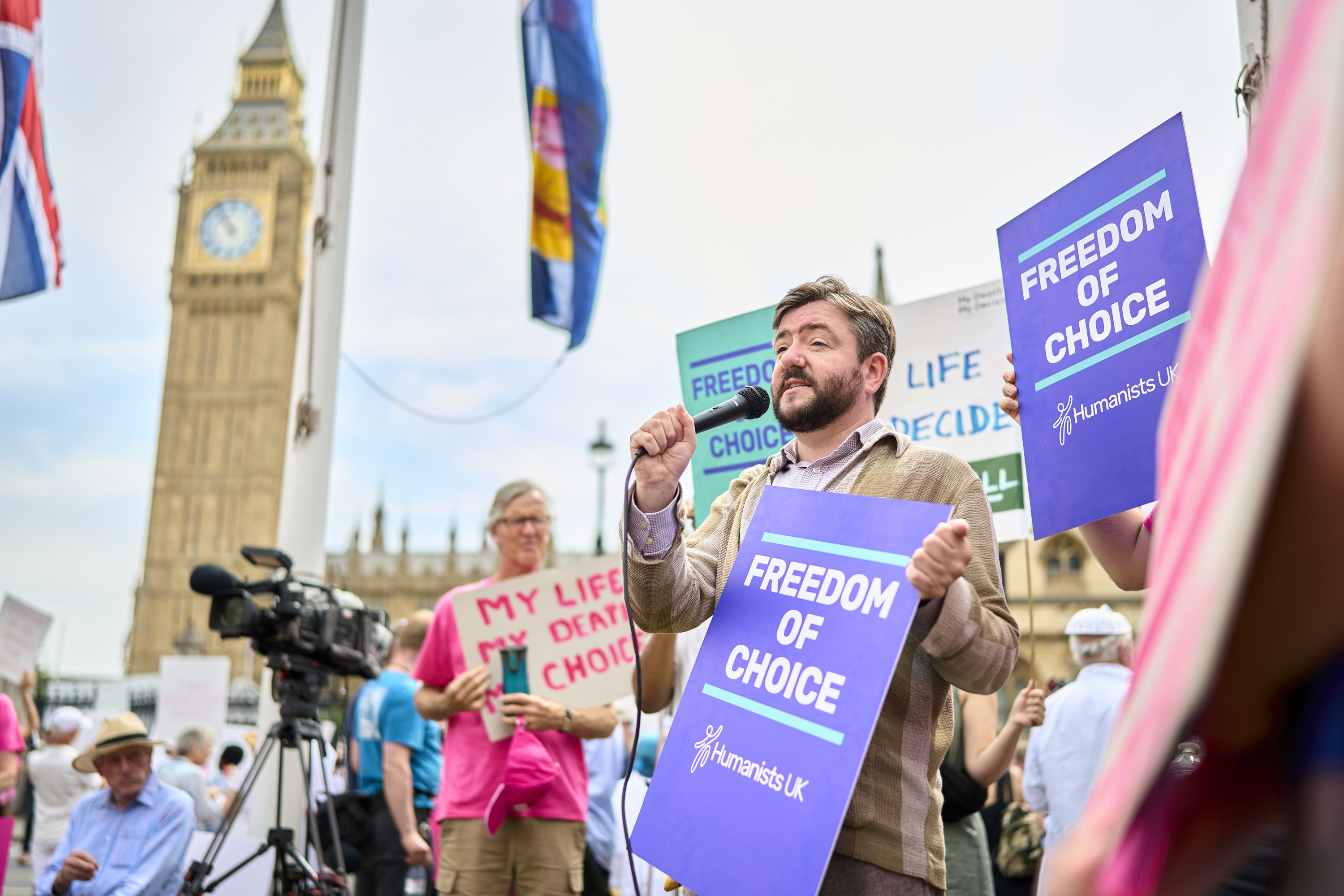
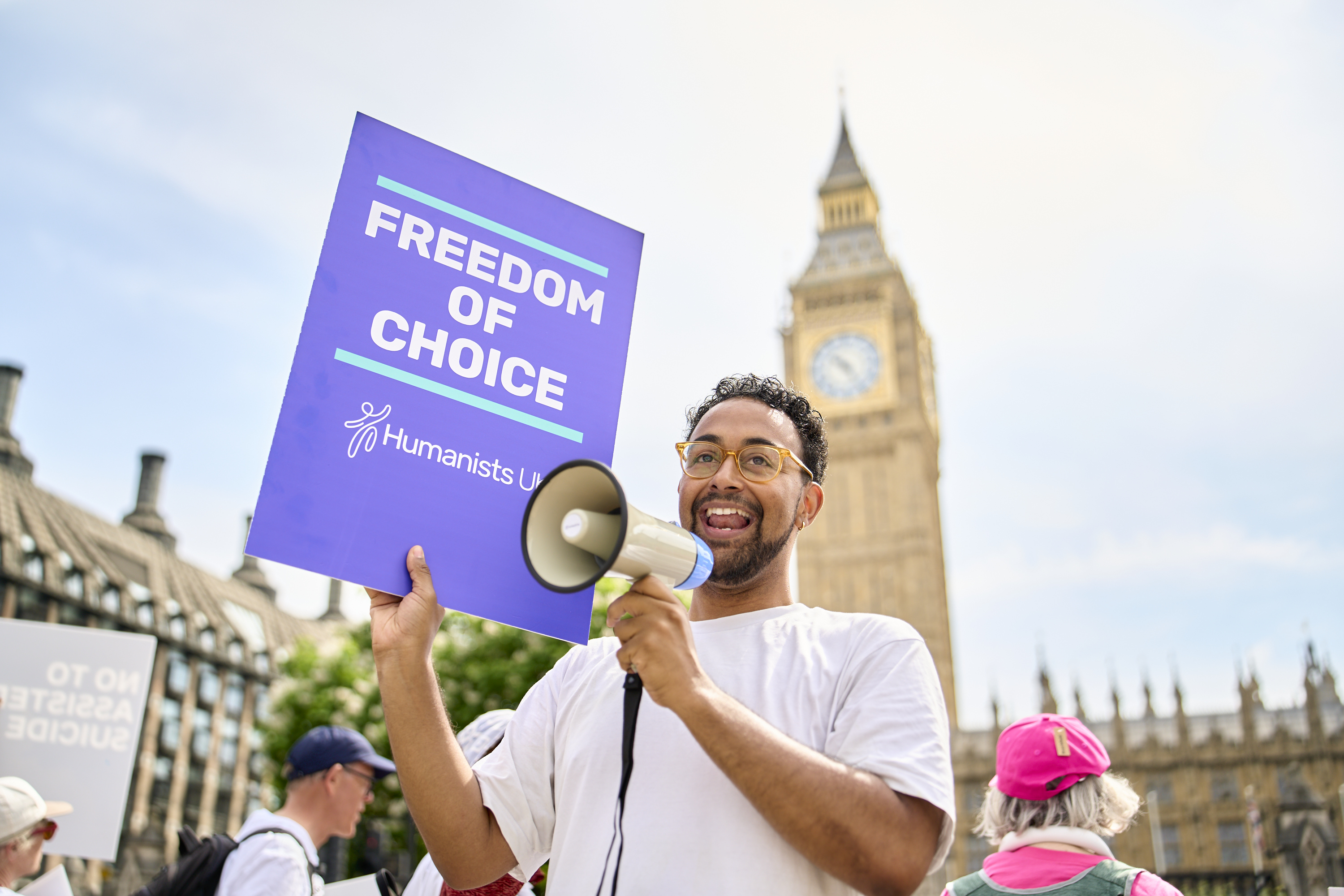
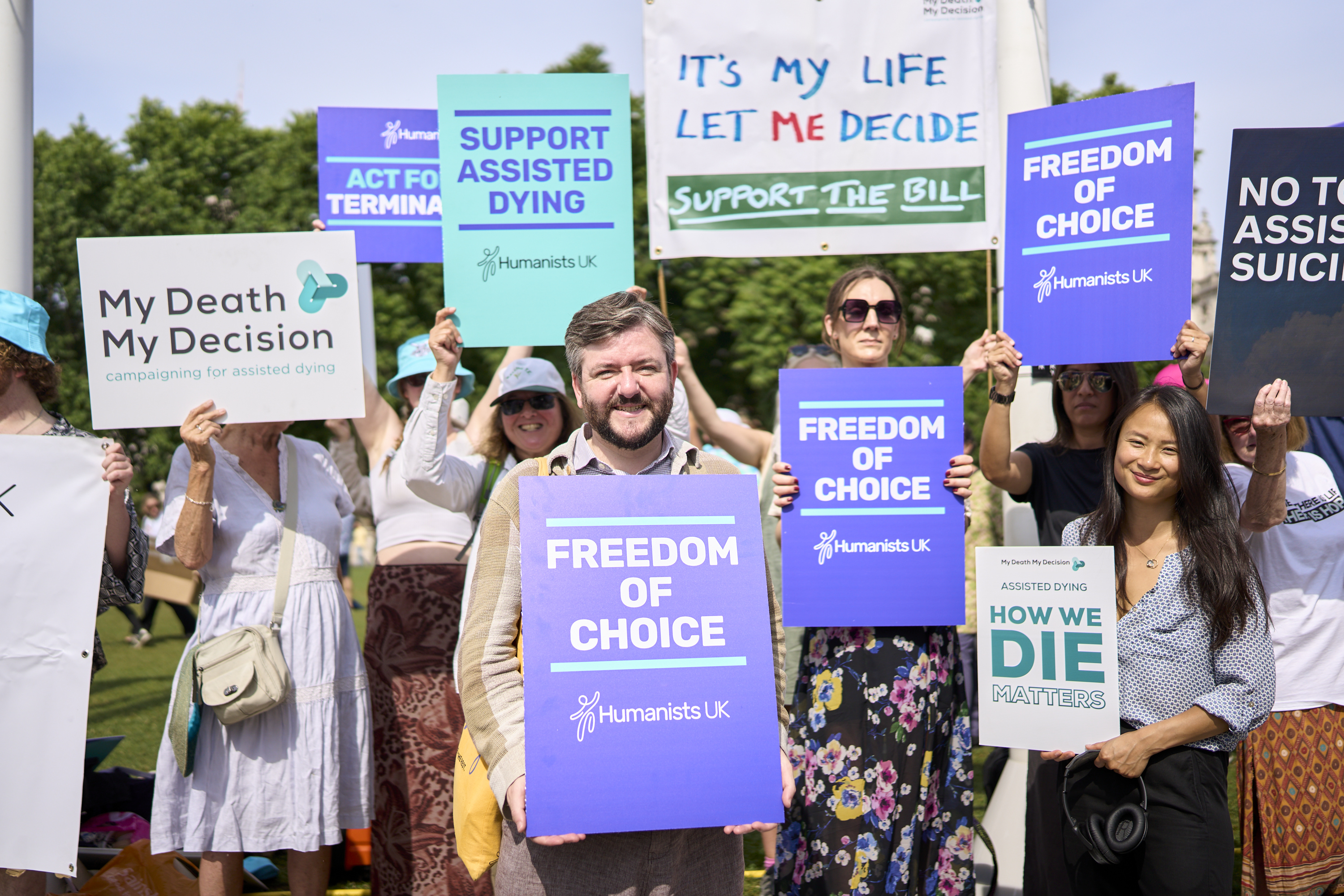
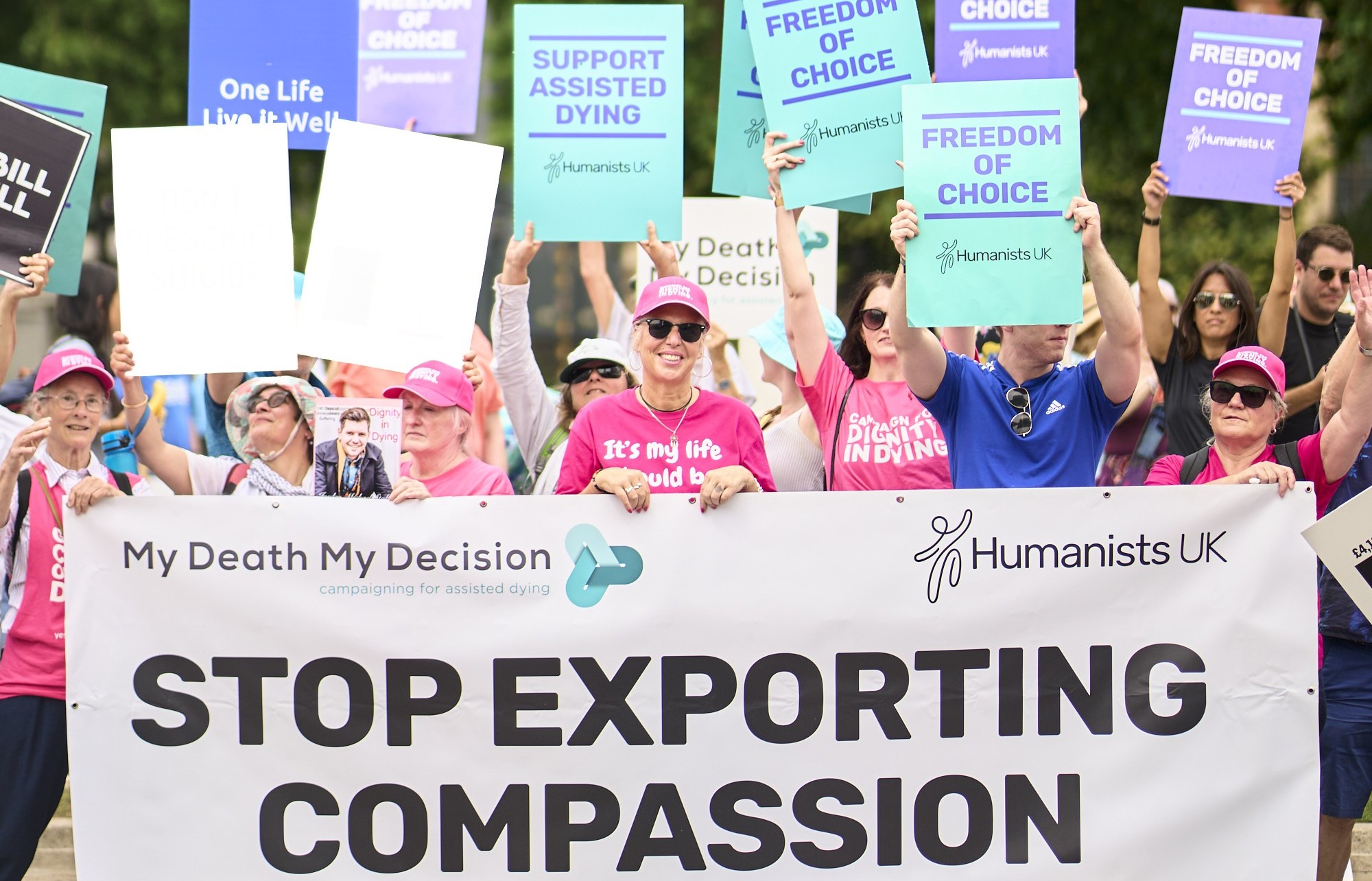
Humanists UK and My Death, My Decision have people and their loved ones who would be affected by this change available for the press.
If you have been affected by the current assisted dying legislation, and want to use your story to support a change in the law, please email campaigns@humanists.uk.
Humanists defend the right of each individual to live by their own personal values, and the freedom to make decisions about their own life so long as this does not result in harm to others. Humanists do not share the attitudes to death and dying held by some religious believers, in particular that the manner and time of death are for a deity to decide, and that interference in the course of nature is unacceptable. We firmly uphold the right to life but we recognise that this right carries with it the right of each individual to make their own judgement about whether their life should be prolonged in the face of pointless suffering.
We recognise that any assisted dying law must contain strong safeguards and the international evidence from countries where assisted dying is legal shows that safeguards can be effective. We also believe that the choice of assisted dying should not be considered an alternative to palliative care, but should be offered together as in many other countries.
Humanists UK is the national charity working on behalf of non-religious people. Powered by over 150,000 members and supporters, we advance free thinking and promote humanism to create a tolerant society where rational thinking and kindness prevail. We provide ceremonies, pastoral care, education, and support services benefitting over a million people every year and our campaigns advance humanist thinking on ethical issues, human rights, and equal treatment for all.
My Death, My Decision is a grassroots campaign group that wants the law in England and Wales to allow mentally competent adults who are terminally ill or intolerably suffering from an incurable condition the option of a legal, safe, and compassionate assisted death. With the support of over 3,000 members and supporters, we advocate for an evidence-based law that would balance individual choice alongside robust safeguards and finally give the people of England and Wales choice at the end of their lives.
Humanists UK and My Death, My Decision are both members of the Assisted Dying Coalition, along with Friends at the End, Humanist Society Scotland, and End of Life Choices Jersey.