

On Friday the Assisted Dying Bill was defeated in the House of Commons by just 16 votes. Analysis by Humanists UK shows that the change from the previous vote that led to defeat was largely due to abstentions – which went from 44 in the third reading of the previous Assisted Dying Bill to 91 now, and came more from bill supporters than opponents. Humanists UK calls this highly disappointing, leaving an unsatisfactory answer for the general public who overwhelmingly back choice.
Abstentions leading to failure

The graph shows a sharp rise in abstentions, largely from absent Labour supporters. Humanists UK spoke to MPs whose foreign visits, including to Ukraine and Norway, prevented voting, affecting more supporters than opponents. Weddings and personal matters also kept MPs away.
MPs have no formal abstention procedure. Proxy voting is limited to new parents, MPs affected by childbirth complications or bereavement, and those needing extended absence for fertility treatment or serious long-term illness or injury.
Unofficial pairing matched some supporters with opponents to cancel out their votes, but relies on trust and goodwill, with no formal procedure.
Scotland and Northern Ireland
The Bill applied only to England and Wales. Scotland recently rejected a similar Bill; the Northern Ireland Assembly has yet to debate the issue.
Scottish and Northern Irish MPs’ opposition proved decisive despite the Bill not affecting their constituents. Northern Ireland voted 0–9 and Scotland 14–28: a combined net opposition of 23 votes, exceeding the Bill’s 16-vote defeat.
MPs across the UK are more religious than their constituents, and this is especially true in Scotland. Non-religious MPs in NI and Scotland were much more likely to abstain. This was usually because they were Sinn Féin (don’t take their seats) or SNP (don’t vote on devolved matters).
Religion, belief, and the vote
After the second reading of the previous bill, we analysed how MPs voted, given their worldview. (Always accepting that this data – based on what is in the public domain, on oath data, and our own intelligence – is not 100% correct). Repeating this for the new second reading vote:
| Religion or belief | For | Against | Did not vote | Total |
|---|---|---|---|---|
| Christian | 92 | 199 | 48 | 339 |
| Non-religious | 163 | 53 | 37 | 253 |
| Muslim | 2 | 21 | 2 | 25 |
| Sikh | 7 | 3 | 0 | 10 |
| Jewish | 4 | 4 | 2 | 10 |
| Hindu | 1 | 4 | 1 | 6 |
| Quaker | 2 | 1 | 0 | 3 |
| Buddhist | 0 | 1 | 0 | 1 |
| Mormon | 0 | 1 | 0 | 1 |
| Hindu/Sikh | 0 | 0 | 1 | 1 |
| Total | 271 | 287 | 91 | 649 |
Further tables can be found below. What can be seen is that non-religious MPs voted strongly in favour. This has held true throughout all the votes.
MPs are more religious than the population as a whole. 52% are Christian, and 39% belong to no religion – while the latest British Social Attitudes data has half the population as non-religious and a bit less than that as Christian. If MPs reflected the population in their worldviews, the vote would have likely passed.
In Northern Ireland, 78% of MPs are Christian, versus 22% being non-religious – a bit more religious than the whole population, where around 28% are non-religious. Whereas in Scotland, 65% are Christian, versus a third non-religious. That is very out of step with the population as a whole – the 2022 Census recorded 51% of the population as non-religious, versus 39% Christian.
Nathan Stilwell, spokesperson for Humanists UK, said:
‘We know how devastating this defeat is for terminally ill people who have spent their remaining time asking Parliament to listen to their voices. Our analysis suggests that increased absences among supporters were crucial to the 16-vote defeat. A decision of such profound consequence should not hinge on overseas visits, weddings and outdated voting arrangements.
‘This will deepen public disillusionment with our political system. The Commons had already approved this reform, yet filibustering by unelected peers blocked it. People will rightly ask how a system that produces this outcome can claim to represent them. The Government should provide a credible route to change. Terminally ill people cannot wait indefinitely for Parliament to deliver the compassion and choice they deserve.’
Notes
For further comment or information, media should contact Humanists UK Head of Press and Campaign Communications Nathan Stilwell at press@humanists.uk or phone 0203 675 0959 (media only).
2024 second reading vote:
| Religion or belief | Total | For | Against | Did not vote | % For | % Against | % Did not vote |
| Total | 650 | 331 | 276 | 43 | 51% | 42% | 7% |
| Christian total | 336 | 121 | 192 | 23 | 36% | 57% | 7% |
| Protestant | 286 | 113 | 157 | 16 | 40% | 55% | 6% |
| Catholic | 50 | 8 | 35 | 7 | 16% | 70% | 14% |
| Non-religious | 257 | 191 | 50 | 16 | 74% | 19% | 6% |
| Muslim | 25 | 2 | 21 | 2 | 8% | 84% | 8% |
| Sikh | 10 | 7 | 3 | 0 | 70% | 30% | 0% |
| Jewish | 10 | 5 | 4 | 1 | 50% | 40% | 10% |
| Hindu | 6 | 2 | 3 | 1 | 33% | 50% | 17% |
2025 third reading vote:
| Religion or belief | Total | For | Against | Did not vote | % For | % Against | % Did not vote |
| Total | 650 | 314 | 292 | 44 | 48% | 45% | 7% |
| Christian total | 336 | 113 | 200 | 23 | 34% | 60% | 7% |
| Protestant | 286 | 105 | 164 | 17 | 37% | 57% | 6% |
| Catholic | 50 | 8 | 36 | 6 | 16% | 72% | 12% |
| Non-religious | 257 | 185 | 55 | 17 | 72% | 21% | 7% |
| Muslim | 25 | 2 | 22 | 1 | 8% | 88% | 4% |
| Sikh | 10 | 5 | 3 | 2 | 50% | 30% | 20% |
| Jewish | 10 | 5 | 4 | 1 | 50% | 40% | 10% |
| Hindu | 6 | 2 | 4 | 0 | 33% | 67% | 0% |
2026 second reading vote:
| Religion or belief | Total | For | Against | Did not vote | % For | % Against | % Did not vote |
| Total | 649 | 271 | 287 | 91 | 42% | 44% | 14% |
| Christian total | 339 | 92 | 199 | 48 | 27% | 59% | 14% |
| Protestant | 288 | 86 | 164 | 38 | 30% | 57% | 13% |
| Catholic | 51 | 6 | 35 | 10 | 12% | 69% | 20% |
| Non-religious | 253 | 163 | 53 | 37 | 64% | 21% | 15% |
| Muslim | 25 | 2 | 21 | 2 | 8% | 84% | 8% |
| Sikh | 10 | 7 | 3 | 0 | 70% | 30% | 0% |
| Jewish | 10 | 4 | 4 | 2 | 40% | 40% | 20% |
| Hindu | 6 | 1 | 4 | 1 | 17% | 67% | 17% |
On methodology for measuring religiosity:
For many MPs it is a matter of public record what their worldview is, or they have told us in correspondence or in surveys. For others, we use oath and affirmation data. Our staff have watched MPs swear in or affirm in five rounds of elections. We’re not always certain from this data whether an MP is a Protestant or non-religious, so some of these allocations are our best guesswork. Nevertheless, the overall data still paints a broadly accurate picture.
We count the tellers in each vote as having voted with their respective sides, and the MPs who voted through both lobbies – one per vote – among the ‘did not vote’s. We have also omitted some smaller religious groups from our published tables.
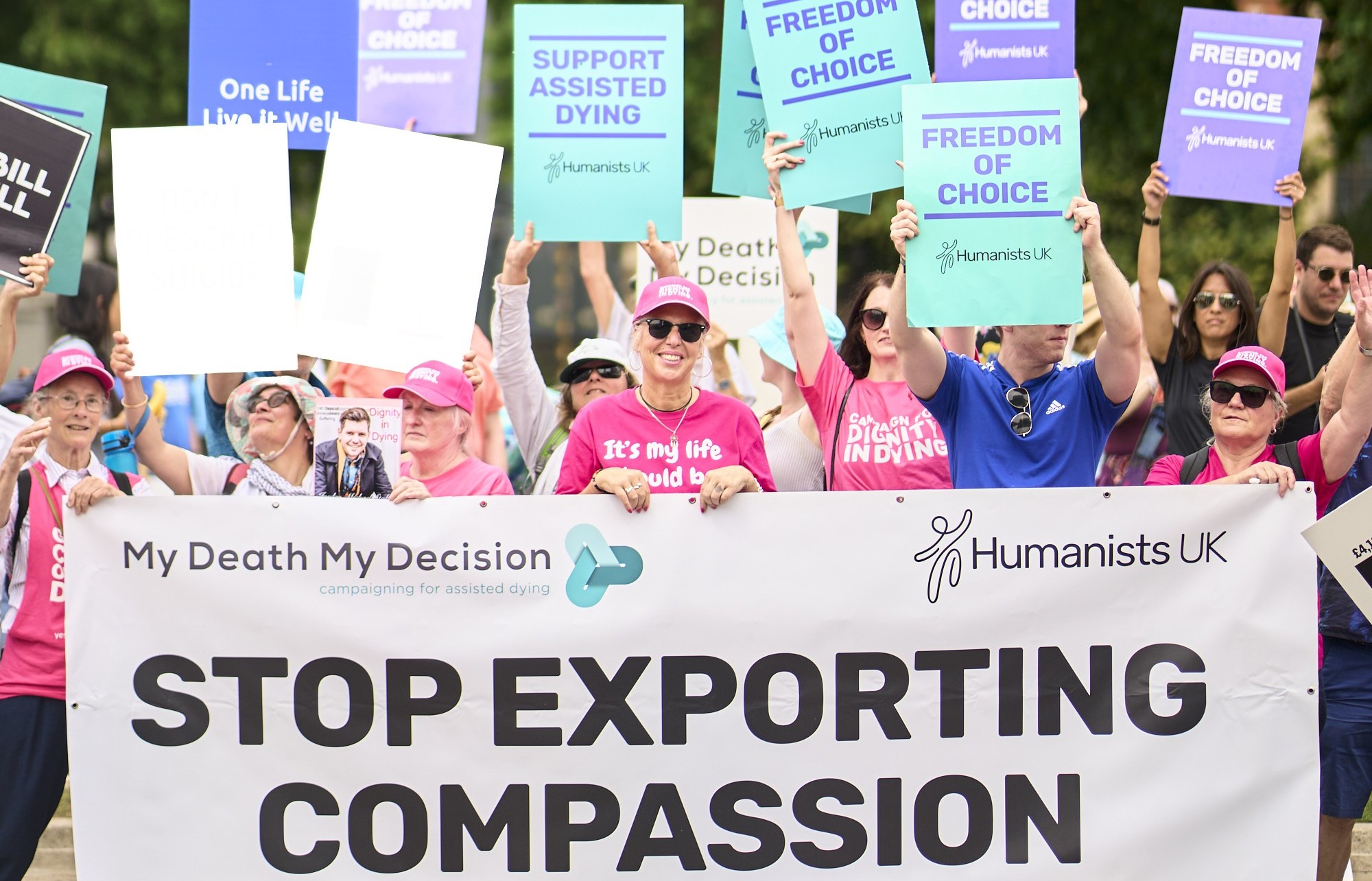
Humanists UK is making the following photos available to the media to use – credit to Simona Sermont/Humanists UK – 1, 2, 3, 4, 5.
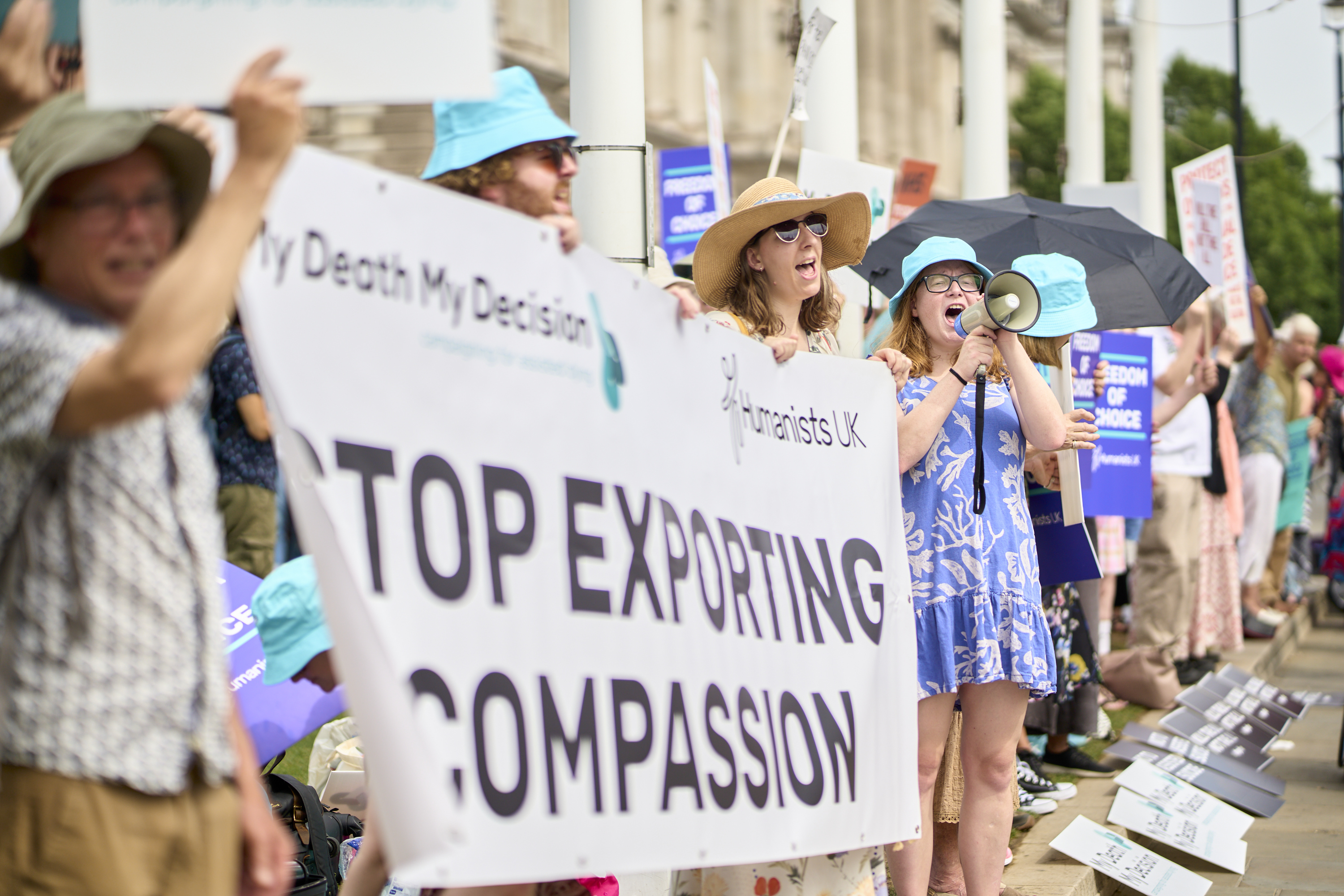
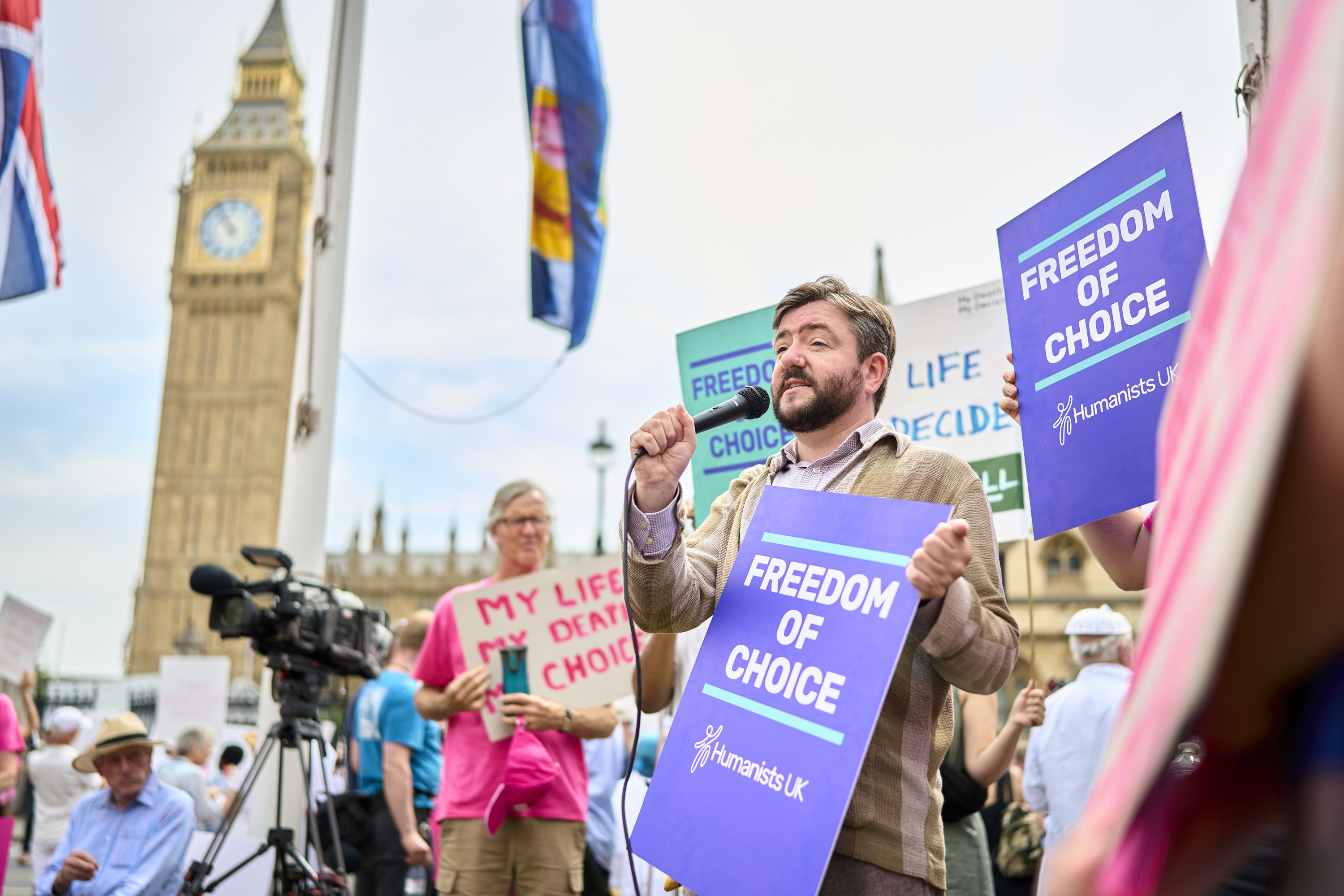
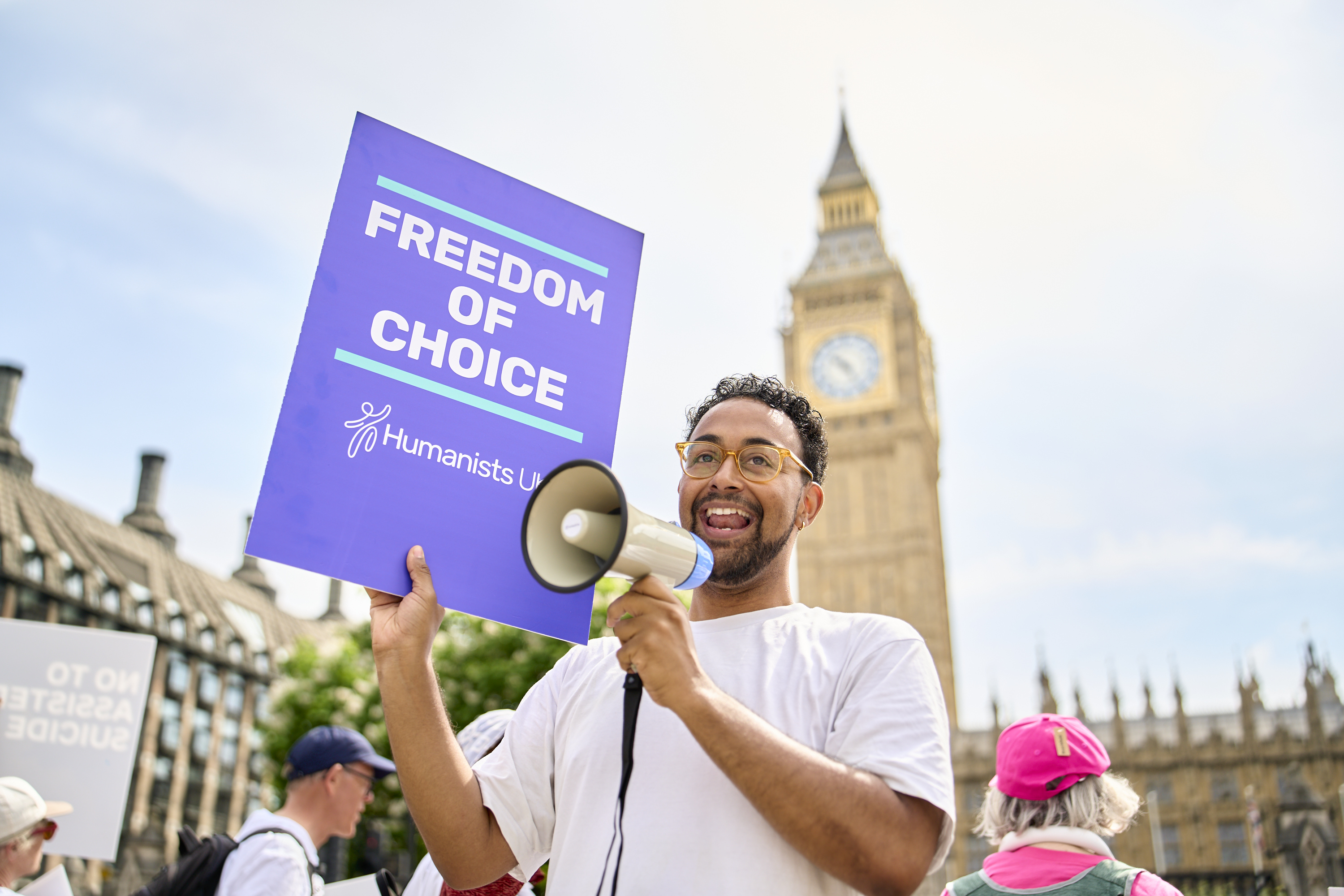
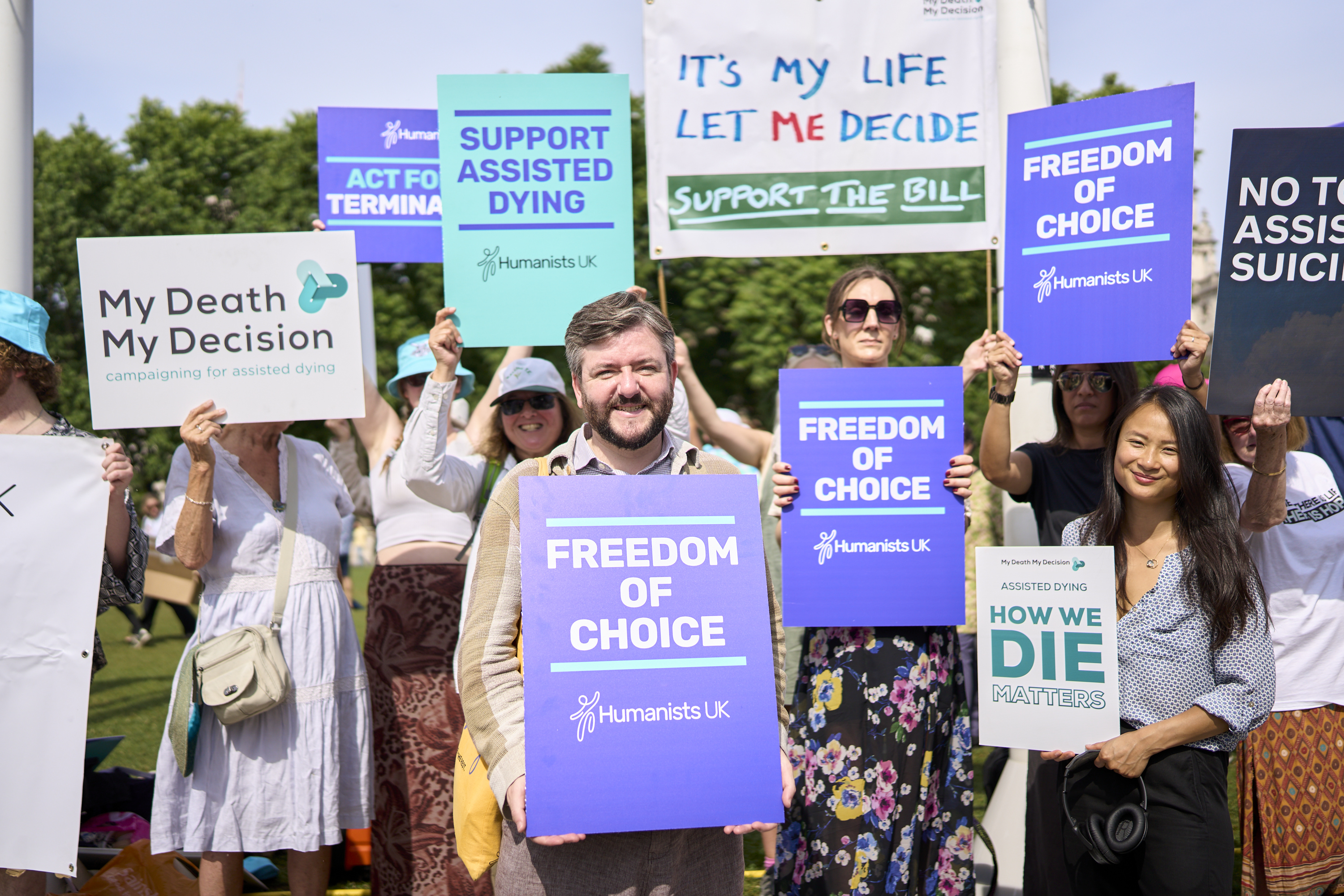
If you have been affected by the current assisted dying legislation, and want to use your story to support a change in the law, please email campaigns@humanists.uk.
Humanists defend the right of each individual to live by their own personal values, and the freedom to make decisions about their own life so long as this does not result in harm to others. Humanists do not share the attitudes to death and dying held by some religious believers, in particular that the manner and time of death are for a deity to decide, and that interference in the course of nature is unacceptable. We firmly uphold the right to life but we recognise that this right carries with it the right of each individual to make their own judgement about whether their life should be prolonged in the face of pointless suffering.
We recognise that any assisted dying law must contain strong safeguards and the international evidence from countries where assisted dying is legal shows that safeguards can be effective. We also believe that the choice of assisted dying should not be considered an alternative to palliative care, but should be offered together as in many other countries.
Humanists UK is the national charity working on behalf of non-religious people. Powered by over 150,000 members and supporters, we advance free thinking and promote humanism to create a tolerant society where rational thinking and kindness prevail. We provide ceremonies, pastoral care, education, and support services benefitting over a million people every year and our campaigns advance humanist thinking on ethical issues, human rights, and equal treatment for all.