

The Crown Prosecution Service (CPS) has dealt with ten new cases of encouraging or assisting the suicide or attempted suicide of another person since March 2025, including one case which went to trial and was acquitted. Three cases have been withdrawn by the police in the last year. Humanists UK and My Death, My Decision lament the House of Lords’ filibustering of the Assisted Dying Bill, which would have established a clearer, more safeguarded process for terminally ill people.
New CPS data shows that, from 1 April 2009 to 31 March 2026, 209 cases recorded as assisted suicide were referred to the CPS by police. This is up from 199 cases in the previous annual release, covering the period to 31 March 2025.
The number of cases withdrawn by police has risen from 39 to 42, and the number of cases not proceeded with by the CPS remains unchanged at 131. These cases are often for people who have accompanied loved ones to Switzerland for an assisted death. The CPS often rules that it is not in the public interest to take these cases to trial. The number of ongoing cases has increased from 10 to 13.
Last year, one case of encouraging or assisting suicide was prosecuted, and one case was charged and acquitted after trial.
Former Directors of Public Prosecutions (DPPs) have increasingly said the current law leaves prosecutors in an untenable position and should be replaced with a clearer statutory framework. In 2024, three former DPPs, Sir Max Hill, Dame Alison Saunders, and Lord Ken Macdonald, publicly backed the Terminally Ill Adults Bill, saying their experience of handling these cases convinced them that the existing system is ‘not fit for purpose’. Sir Keir Starmer has likewise linked his own support for reform to the scores of assisted dying prosecution decisions he faced as DPP.
Humanist celebrant Sue Lawford was arrested at 5am, held for 19 hours, and subjected to a six-month investigation for accompanying someone to have an assisted death in Switzerland. Police searched her home for more than four hours, seizing phones, other electronic devices, her passport, and documents. They later dropped the charges.
The costs of flying to Switzerland for an assisted death are often over £12,000, and the number of people in the UK registered as members of the assisted dying centre Dignitas has continued to rise.
The filibuster of the Terminally Ill Adults Bill:
Despite peers from both sides of the debate agreeing that the Terminally Ill Adults Bill should be returned to the Commons, the Bill will be timed out over procedure. Nearly 1,300 changes to the Bill have been proposed, with seven of the most vocal opponents putting forward over 600 amendments between them. Amendments have included a pregnancy test for all applicants, including men, a one-year holiday ban for applicants, and an unworkable requirement for half a dozen GP visits.
Peers spent nearly an hour debating a group of probing amendments from Lord Frost that would change the wording of ‘assistance to end their own life’ in the Bill to ‘medical help to commit suicide by provision of lethal drugs’. These amendments add nothing to the clarity, workability or safety of the Bill and replace neutral, clinically accurate language with stigmatising terminology.
We have identified several instances of peers making it explicitly clear that they are trying to block the Bill by means other than it being voted down.
Nathan Stilwell, spokesperson for Humanists UK, said:
‘By the time these police investigations begin, the damage is already done: the person at the centre of the case has died, and their loved ones are left to endure the trauma of police scrutiny on top of bereavement. A safeguarded assisted dying law would bring scrutiny and oversight forward, to the point before death, where decisions can be properly assessed and protected.
‘Assisted dying is about compassion, dignity, and autonomy, giving terminally ill, mentally competent adults choice at the end of life, not punishing families after the event.’
Dave Sowry, Board Member of My Death, My Decision, said:
‘I was investigated by the police on my return from Switzerland, having accompanied my wife to Dignitas for an assisted death. In my case, the police decided to take no further action. What sort of country do we live in where accompanying someone who has made a personal choice at the end of their life results in such additional stress and jeopardy?
‘A humane assisted dying law would allow these decisions to be considered openly, safely, and in advance, instead of adding trauma after the fact to people who are already grieving.’
Notes
For further comment or information, media should contact Nathan Stilwell at nathan@humanists.uk or phone 07456 200033. (media only)
Humanists UK is making the following photos available to the media to use – credit to Simona Sermont/Humanists UK – 1, 2, 3, 4, 5.
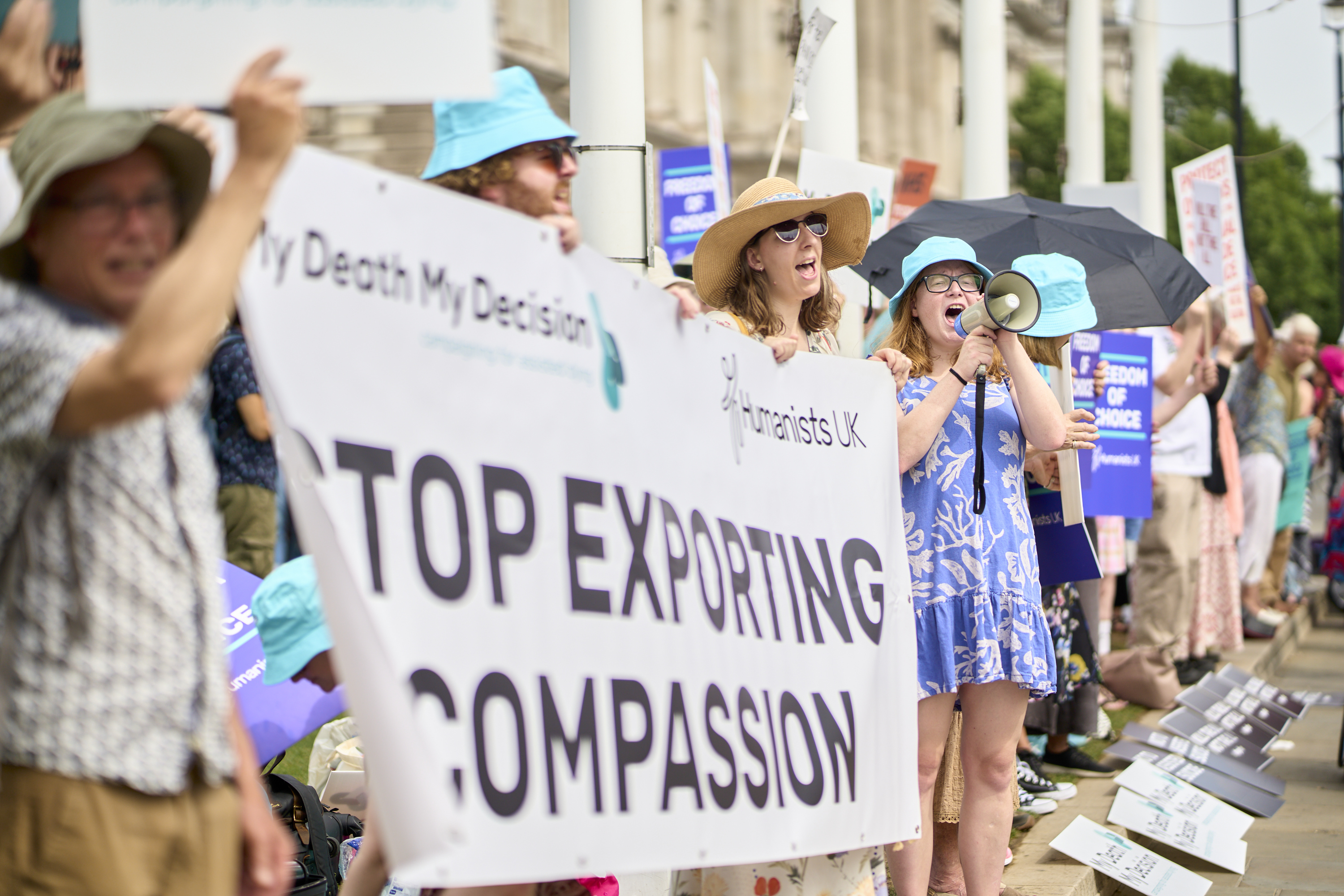
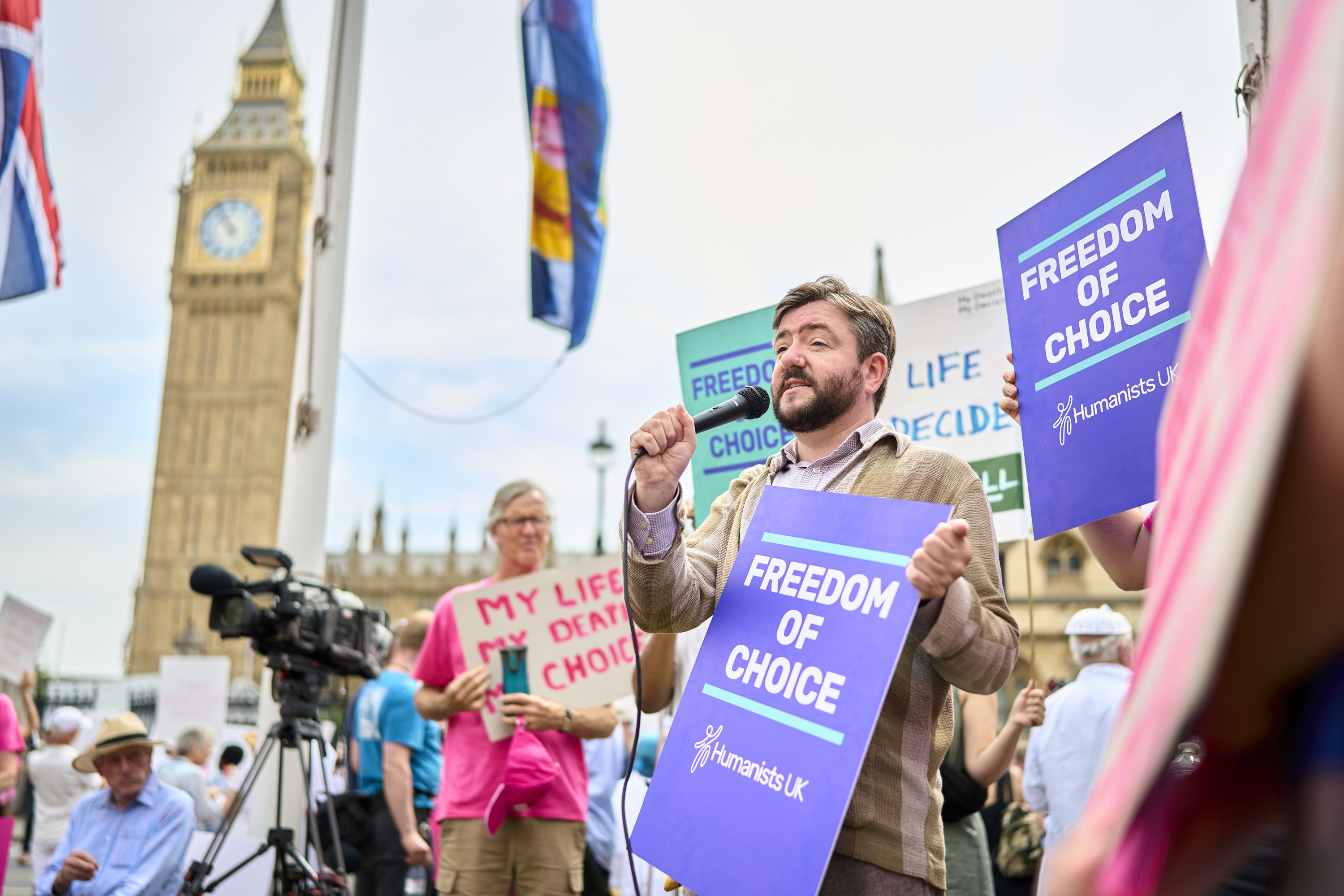

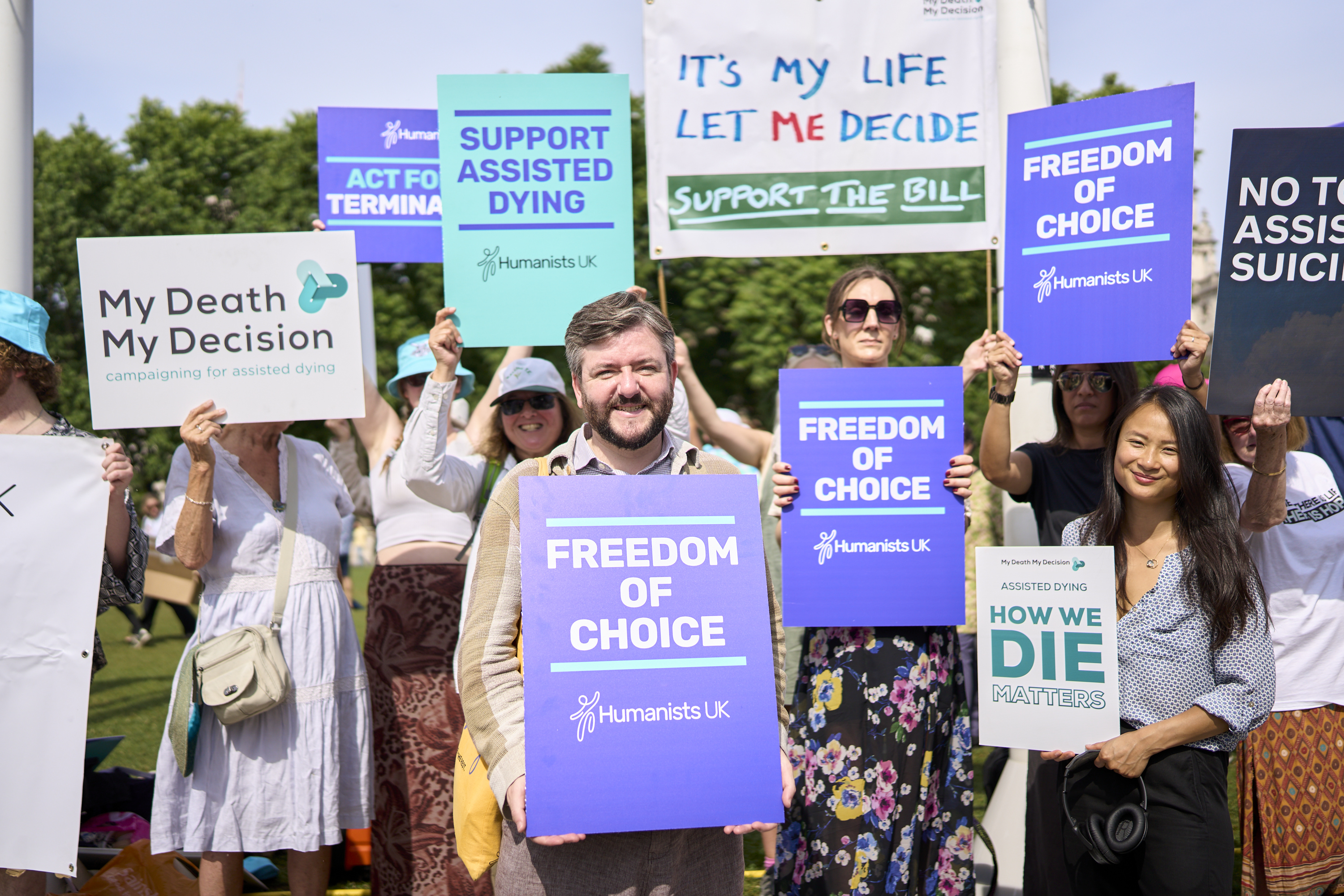
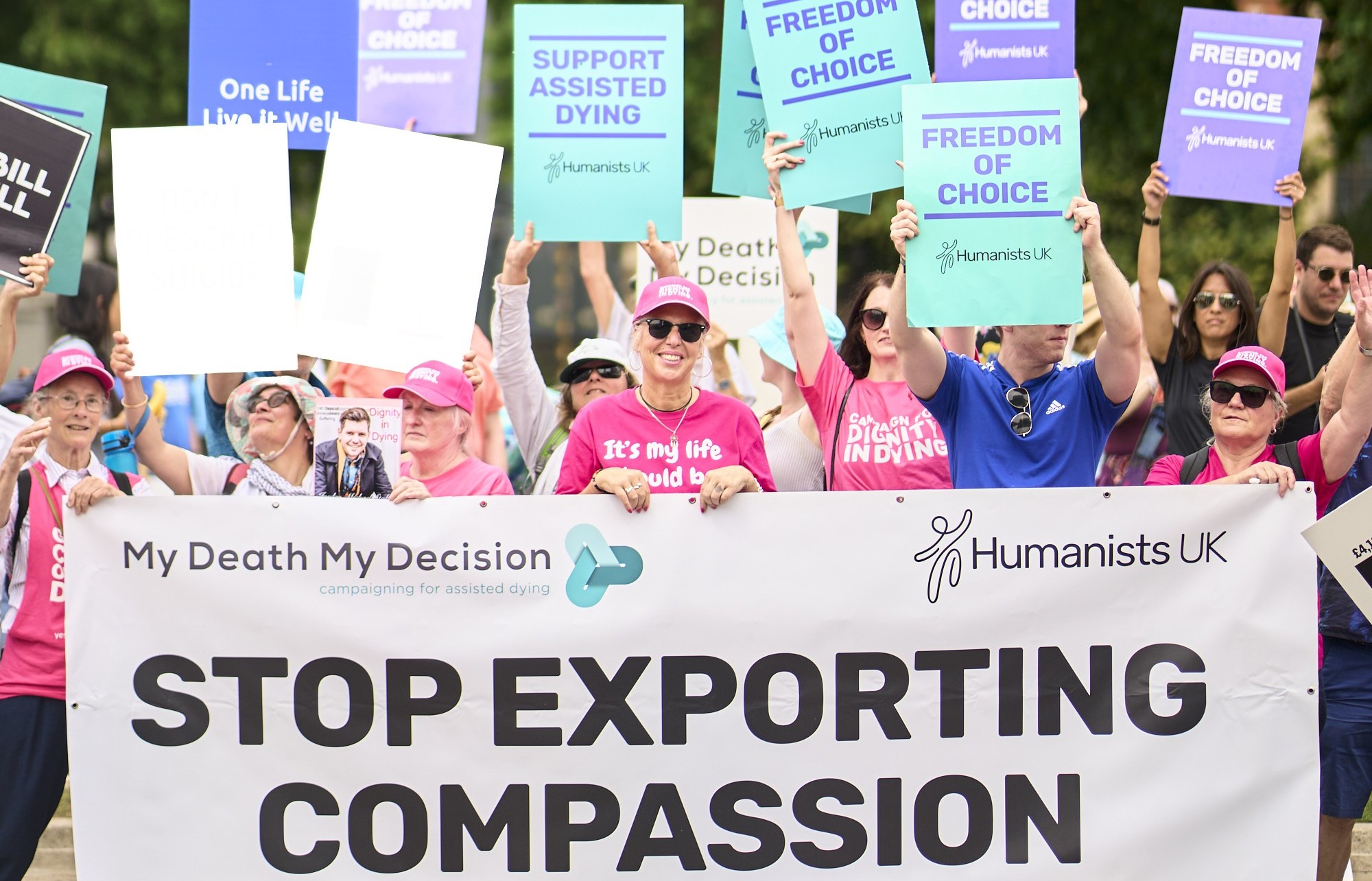
Humanists UK has people and their loved ones who would be affected by this change available for the press.
If you have been affected by the current assisted dying legislation, and want to use your story to support a change in the law, please email campaigns@humanists.uk.
Humanists defend the right of each individual to live by their own personal values, and the freedom to make decisions about their own life so long as this does not result in harm to others. Humanists do not share the attitudes to death and dying held by some religious believers, in particular that the manner and time of death are for a deity to decide, and that interference in the course of nature is unacceptable. We firmly uphold the right to life but we recognise that this right carries with it the right of each individual to make their own judgement about whether their life should be prolonged in the face of pointless suffering.
We recognise that any assisted dying law must contain strong safeguards and the international evidence from countries where assisted dying is legal shows that safeguards can be effective. We also believe that the choice of assisted dying should not be considered an alternative to palliative care, but should be offered together as in many other countries.
Humanists UK is the national charity working on behalf of non-religious people. Powered by over 150,000 members and supporters, we advance free thinking and promote humanism to create a tolerant society where rational thinking and kindness prevail. We provide ceremonies, pastoral care, education, and support services benefitting over a million people every year and our campaigns advance humanist thinking on ethical issues, human rights, and equal treatment for all.